
Topic Battle

Where Everything Fights Everything

Sloth

Sloth

Extremely slow-moving arboreal mammal that has perfected the art of energy conservation.

VS
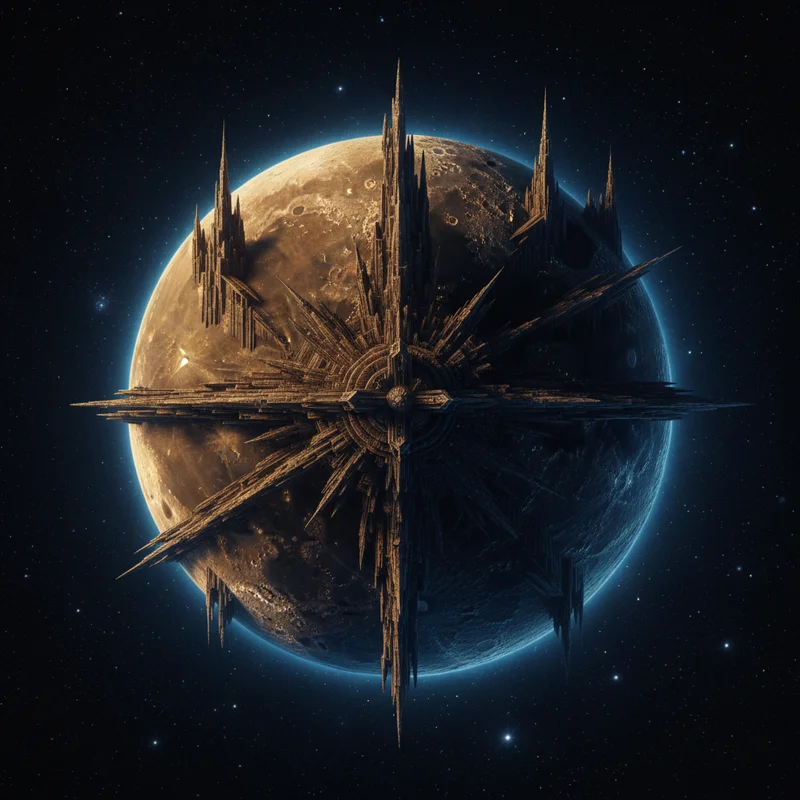
The Moon

The Moon

Earth's natural satellite and space race destination.

Battle Analysis

Speed Sloth Wins
70%
30%
Sloth The Moon

Sloth

The three-toed sloth achieves a maximum velocity of 0.24 kilometres per hour, a figure so modest that it barely registers on most measuring instruments. This creature descends from its arboreal sanctuary precisely once per week to defecate, a journey of such perilous slowness that predators have been known to lose interest mid-attack. The sloth's muscles have evolved to operate at approximately one-third the speed of comparable mammals, representing not a deficiency but rather an exquisite adaptation to energy conservation. Scientists have documented sloths taking up to one month to complete the digestion of a single leaf.

The Moon

Luna orbits our planet at a stately 3,683 kilometres per hour, covering the entirety of its 2.4 million kilometre journey in 27.3 days. Yet relative to Earth-bound observers, the Moon appears almost stationary, rising and setting with such glacial inevitability that one might forget it moves at all. The Moon is simultaneously retreating from Earth at 3.8 centimetres annually, a departure so unhurried that it shall require billions of years to complete. This celestial body has refined the appearance of immobility into an art form.

VERDICT

The sloth achieves genuine slowness through biological commitment, whilst the Moon merely appears slow from our vantage point.
Longevity The Moon Wins
30%
70%
Sloth The Moon

Sloth

In the wild, sloths typically survive 20 to 30 years, an impressive span for a creature seemingly designed to be eaten by eagles. Captive specimens have exceeded 40 years, demonstrating that with predator removal, the sloth's conservative lifestyle pays dividends. Their slow metabolism may contribute to cellular longevity, though research remains ongoing. The sloth lineage itself extends back some 35 million years, with ancient ground sloths achieving sizes rivalling modern elephants before their extinction roughly 11,000 years ago.

The Moon

The Moon formed approximately 4.5 billion years ago when a Mars-sized body collided with the proto-Earth, ejecting material that coalesced into our faithful satellite. It shall persist for billions of years hence, long after the Sun has expanded to consume the inner planets. The Moon predates every living thing by aeons and shall outlast every species yet to evolve. Its craters preserve a record of bombardment stretching back to the Late Heavy Bombardment period, a chronicle older than any fossil record on Earth.

VERDICT

The Moon's 4.5 billion year existence dwarfs even the most long-lived sloth lineage by orders of magnitude.
Energy efficiency The Moon Wins
30%
70%
Sloth The Moon

Sloth

The sloth has engineered perhaps the most energy-efficient mammalian existence on the planet. With a metabolic rate approximately 40 to 45 percent lower than expected for its body mass, this creature subsists on leaves so nutritionally deficient that most animals would starve. The sloth sleeps 15 to 20 hours daily, moves only when absolutely necessary, and maintains a body temperature that fluctuates with ambient conditions. Every aspect of sloth physiology represents a masterclass in minimising caloric expenditure whilst maintaining viable existence.

The Moon

The Moon expends no energy whatsoever to maintain its orbit, having achieved gravitational equilibrium with Earth some 4.5 billion years ago. It requires no food, no rest, and no maintenance. The Moon merely exists, following the path prescribed by physics with perfect efficiency. There are no biological systems to power, no muscles to fuel, no neurons to fire. The Moon has achieved what the sloth merely approximates: true zero-energy existence, coasting on momentum imparted during the violent collision that birthed it.

VERDICT

The Moon requires literally zero energy input, whilst the sloth still requires sustenance however minimal.
Global recognition The Moon Wins
30%
70%
Sloth The Moon

Sloth

The sloth has achieved remarkable fame in recent decades, becoming an unlikely symbol of relaxation in an overstimulated world. From internet memes to children's animated films, this creature has captured public imagination with its permanently bemused expression. The sloth sanctuary in Costa Rica receives thousands of visitors annually, whilst 'sloth' has entered common parlance as both insult and aspiration. Conservation efforts have elevated certain sloth species to mascot status for rainforest preservation movements across the globe.

The Moon

The Moon represents perhaps the most universally recognised object in human experience, save the Sun itself. Every culture in recorded history has named it, worshipped it, feared it, or calculated by its phases. The Moon has inspired countless deities, calendars, and navigational systems. Human beings travelled 384,400 kilometres to walk upon its surface, an achievement watched by an estimated 600 million people. The Moon is visible from every inhabited corner of Earth and has been painted, photographed, and poeticised beyond measure.

VERDICT

The Moon has been recognised by every human civilisation for millennia, whilst sloth fame is a relatively recent phenomenon.
Environmental impact The Moon Wins
30%
70%
Sloth The Moon

Sloth

The sloth plays a surprisingly significant ecological role, serving as a mobile ecosystem unto itself. Algae grows upon its fur, providing camouflage and nutrients for moth larvae that complete their lifecycle within sloth pelage. The sloth's weekly descents fertilise the ceiba trees upon which it depends, creating localised nutrient cycling systems. As prey for harpy eagles and jaguars, sloths occupy a crucial position in rainforest food webs. Their presence indicates ecosystem health, making them valuable indicator species.

The Moon

The Moon's environmental impact upon Earth approaches the incalculable. Lunar gravitational forces drive ocean tides, flushing coastal ecosystems and enabling intertidal life. The Moon stabilises Earth's axial tilt, preventing the catastrophic climate swings that would render complex life impossible. Evidence suggests the Moon may have been essential to the development of life itself, with tidal pools serving as primordial nurseries. Without Luna, Earth would experience day lengths of merely 8 hours and axis variations causing ice ages at the equator.

VERDICT

The Moon's gravitational influence makes complex terrestrial life possible, surpassing any individual species' ecological contribution.
👑

The Winner Is

42 - 58
This investigation has revealed a contest between the admirably idle and the cosmically indifferent. The sloth, for all its magnificent commitment to lethargy, remains bound by biological imperatives: it must eat, excrete, and eventually reproduce. The Moon suffers no such constraints. It hangs in the firmament requiring nothing, demanding nothing, and receiving the adoration of billions without lifting so much as a metaphorical finger. The sloth has achieved energy efficiency; the Moon has transcended the concept entirely. The sloth endures for decades; the Moon for aeons. The sloth is beloved by internet users; the Moon is worshipped by civilisations. With a final score of 58 to 42, the Moon claims victory through the sheer incomprehensibility of its scale and permanence.
Sloth
42%
The Moon
58%

Share this battle

More Comparisons