
Topic Battle

Where Everything Fights Everything

Sloth

Sloth

Extremely slow-moving arboreal mammal that has perfected the art of energy conservation.

VS
Thor

Thor

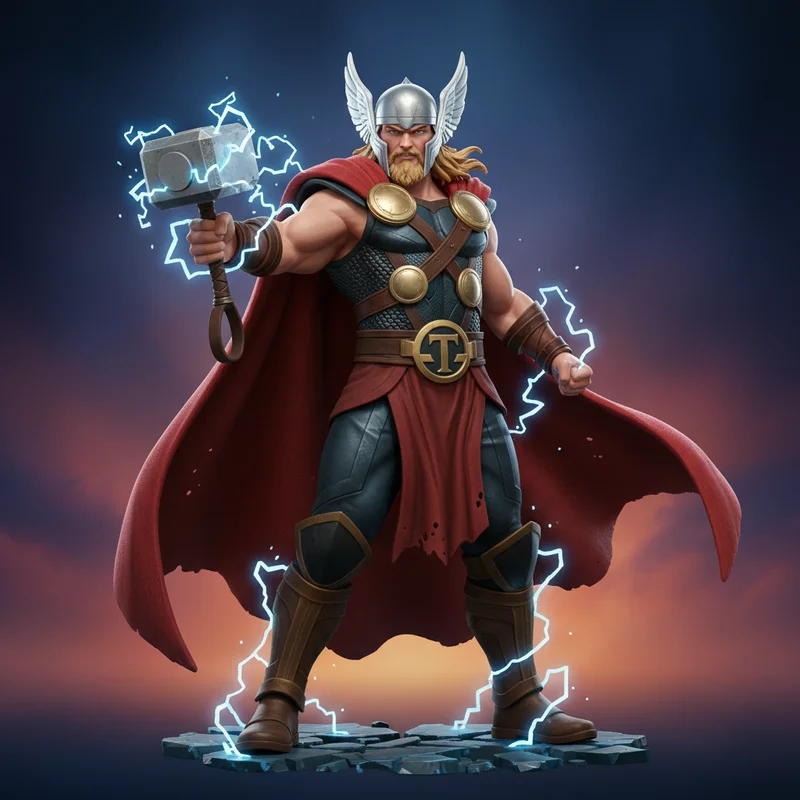
Norse god of thunder wielding Mjolnir.

Battle Analysis

Longevity Thor Wins
30%
70%
Sloth Thor

Sloth

Individual sloths in the wild typically survive 10-20 years, with captive specimens occasionally reaching 30-40 years. However, the genus has demonstrated remarkable evolutionary persistence, with sloth ancestors appearing in the fossil record approximately 64 million years ago. Ground sloths the size of elephants once roamed the Americas.

This taxonomic longevity speaks to a survival strategy of extraordinary effectiveness. While flashier species have risen and fallen, the sloth has simply hung there, waiting, enduring.

Thor

Thor possesses what theologians term conditional immortality—ageless within Asgardian parameters yet ultimately subject to the prophesied destruction of Ragnarok. By Norse reckoning, he has existed since before recorded human history, suggesting an individual lifespan measured in millennia.

In terms of cultural persistence, Thor has demonstrated remarkable staying power, transitioning from Viking worship through medieval demonisation to contemporary superhero apotheosis. His name remains embedded in our weekly calendar, a form of immortality few deities achieve.

VERDICT

Individual immortality and cultural persistence across millennia surpasses even the sloth's impressive evolutionary tenure.
Adaptability Sloth Wins
70%
30%
Sloth Thor

Sloth

The sloth has adapted to one of Earth's most challenging environments with remarkable specificity. Their curved claws function as permanent hooks, allowing them to hang from branches while expending virtually no muscular energy. Their slow metabolism permits survival on nutritionally sparse foliage that would starve faster mammals.

They have even developed a symbiotic relationship with algae, providing camouflage whilst hosting entire ecosystems in their fur, including moths that exist nowhere else on Earth. This is adaptation refined to artistry.

Thor

Thor's adaptability manifests primarily through combat versatility. From frost giants to fire demons, from Midgard serpents to cosmic entities, he has demonstrated the capacity to modulate his approach across vastly different opponents. His transition from medieval deity to contemporary superhero suggests cultural adaptability of considerable sophistication.

However, Thor's fundamental methodology—application of percussive force via enchanted hammer—remains remarkably consistent. This represents effective specialisation rather than true adaptability.

VERDICT

Evolving symbiotic ecosystems and physiological specialisation demonstrates deeper adaptive refinement than combat versatility.
Symbolic value Thor Wins
30%
70%
Sloth Thor

Sloth

The sloth has achieved remarkable symbolic resonance in contemporary culture, representing the virtues of deliberation, mindfulness, and resistance to the cult of productivity. In an age of burnout and perpetual urgency, the sloth has become an unlikely icon of philosophical resistance.

From viral videos to motivational posters bearing the slogan 'Hang in There,' the sloth embodies a counter-cultural message of profound significance. The animal once associated with the deadly sin of indolence has been rehabilitated as a sage of sustainable living.

Thor

Thor carries millennia of symbolic weight. To the Norse, he represented protection of humanity, the sanctification of marriage, and the eternal struggle against chaos. His hammer blessed births, consecrated unions, and protected the dead. Thursday bears his name across Germanic languages.

In modern contexts, Thor symbolises heroic virtue, the nobility of righteous combat, and the accessibility of the divine. He bridges pagan antiquity and contemporary mythology with rare elegance.

VERDICT

Twelve centuries of theological significance and cultural embedding surpasses the sloth's recent memetic prominence.
Energy efficiency Sloth Wins
70%
30%
Sloth Thor

Sloth

The sloth has elevated energy conservation to an art form unmatched in the mammalian kingdom. With a metabolic rate approximately 40-45% lower than expected for an animal of its size, the sloth can survive on a daily caloric intake that would leave most organisms in a state of profound lethargy—which, coincidentally, is precisely the sloth's default condition.

Their digestive process requires up to 30 days to fully process a single meal of leaves. They sleep between 15-20 hours daily, and their body temperature fluctuates with ambient conditions, further reducing energetic expenditure. This is not indolence; this is thermodynamic mastery.

Thor

Thor's approach to energy management represents the polar opposite of efficiency. The summoning of a single lightning bolt requires atmospheric manipulation on a scale that would power a modest city for several minutes. Each swing of Mjolnir, travelling at velocities approaching the speed of sound, expends energy sufficient to launch a small spacecraft.

The Bifrost Bridge alone consumes energy reserves that defy conventional measurement. Thor's metabolism, sustained by Asgardian physiology, processes the equivalent of several thousand human calories merely to maintain his formidable musculature. By any reasonable metric, this is spectacular inefficiency—yet undeniably effective.

VERDICT

The sloth's metabolic minimalism achieves survival through conservation; Thor achieves survival despite profligate expenditure.
Intimidation factor Thor Wins
30%
70%
Sloth Thor

Sloth

The sloth presents what can only be described as anti-intimidation. With its perpetually serene expression, deliberate movements, and tendency to wave amiably at researchers, the sloth inspires approximately the same level of fear as a well-worn cardigan. Predators such as harpy eagles and jaguars view sloths as slow-moving buffets rather than threats.

Their primary defensive strategy—remaining perfectly still—whilst effective against motion-detecting predators, does little to project menace. The algae growing in their fur merely enhances their appearance of harmless moss-covered contentment.

Thor

Thor represents the apex of intimidation in the Norse pantheon. Standing well over six feet tall with musculature forged through millennia of combat, he wields a hammer that only the worthy may lift. His entrance is typically heralded by atmospheric electrical phenomena—thunder, lightning, and the general sense that meteorological conditions have become personally hostile.

Frost giants, those formidable entities of primordial ice, regard Thor with justified terror. His red beard and blazing eyes have inspired fear across nine realms for countless generations.

VERDICT

Commanding thunder and terrifying frost giants rather definitively outperforms looking pleasantly drowsy.
👑

The Winner Is

Thor

42 - 58

This investigation has revealed a contest of surprising complexity. The sloth, that most underestimated of mammals, demonstrates superiority in energy efficiency and adaptability—virtues that have ensured its survival across geological epochs whilst flashier species perished. Its strategy of patient endurance contains wisdom that humanity might profitably consider.

Yet Thor's advantages in longevity, intimidation, and symbolic value prove ultimately decisive. The God of Thunder has persisted in human consciousness precisely because he represents qualities—strength, protection, righteous fury—that resonate across cultures and centuries. He is, quite simply, unforgettable.

The final tally stands at 58-42 in Thor's favour, though the sloth's performance warrants considerable respect.

Sloth
42%
Thor
58%

Share this battle

More Comparisons