Where Everything Fights Everything

Sloth vs Time

😜 Just for fun — a tongue-in-cheek, gloriously unscientific showdown.

Sloth

Sloth

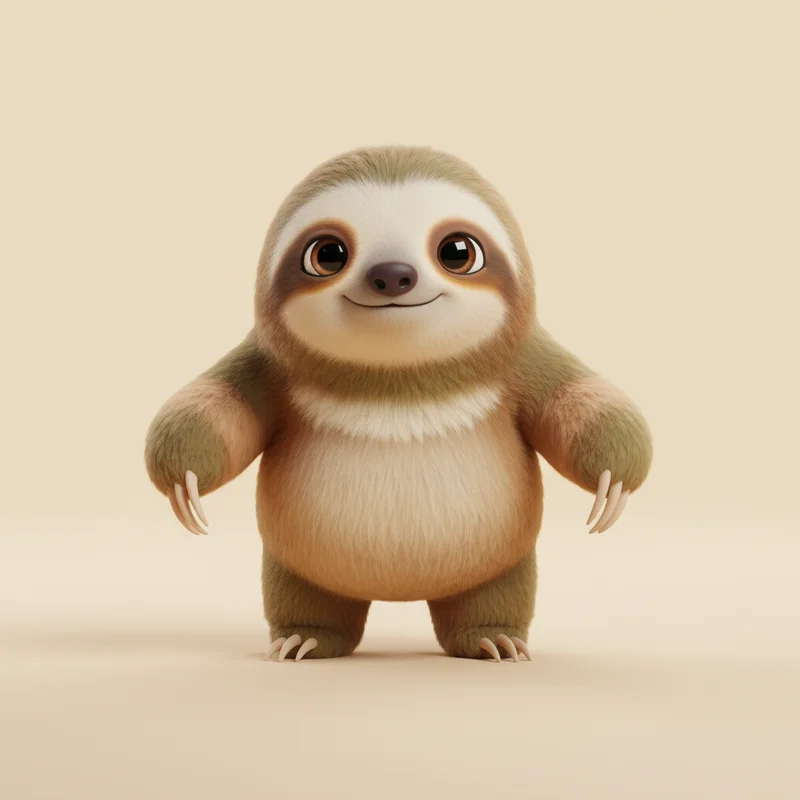
Extremely slow-moving arboreal mammal that has perfected the art of energy conservation.

VS
Time

Time

Dimension that refuses to slow down when needed.

The Matchup

In the grand theatre of existence, few matchups probe the nature of reality quite like this one. The sloth, a creature so magnificently unhurried that it grows algae on its fur, faces off against time itself - the invisible conveyor belt upon which all existence rides. One is a three-toed philosopher hanging from a cecropia branch; the other is the fourth dimension made manifest. Both, curiously, share an intimate relationship with the concept of waiting.

Scientists estimate that a sloth moves at approximately 0.24 kilometres per hour. Time, by contrast, moves at exactly one second per second - a rate so consistent it borders on the obsessive. Yet here we find ourselves, compelled to determine which proves superior when subjected to rigorous academic scrutiny.

Battle Analysis

Reliability Time Wins
🏆 Time takes this round

Sloth

In terms of reliability, the sloth offers consistent predictability within certain parameters. One can rely upon a sloth to be slow. One can depend upon it to sleep extensively. One can trust that it will descend its tree approximately once per week for bathroom purposes. These are certainties in an uncertain world.

However, the sloth cannot be relied upon for punctuality, urgent assistance, or any task requiring completion within a human timeframe. As a postal service, it would be catastrophic. As a rescue animal, inadvisable. Its reliability is domain-specific at best.

Time

Time is the gold standard of reliability. It has never taken a day off, never called in sick, never slowed down because it 'just wasn't feeling it today.' Since the universe began, time has maintained its pace with mechanical precision that makes Swiss watchmakers weep with professional envy.

Every scientific measurement ultimately references time. Every contract depends upon it. The phrase 'as reliable as time' exists precisely because nothing else achieves this benchmark. Time may be cruel, indifferent, and impossible to negotiate with, but it is utterly, devastatingly reliable.

VERDICT

Time wins this category with the authority of 13.8 billion years of perfect attendance. The sloth's reliability, while charming in its specificity, cannot compete with a force that has never once failed to proceed forward at exactly the rate required.

Adaptability Sloth Wins
🏆 Sloth takes this round

Sloth

The sloth has demonstrated remarkable evolutionary adaptability, albeit at its own pace. Over 64 million years, these creatures have perfected the art of arboreal minimalism. They have adapted to digest leaves that would poison most mammals, developed symbiotic relationships with moths that live in their fur, and evolved a neck structure allowing 270-degree rotation - useful for an animal that cannot be bothered to turn its body.

When faced with deforestation, sloths have shown capacity to adapt to fragmented habitats, though one suspects their strategy involves simply not noticing the change quickly enough to panic. Their adaptability is genuine, if unhurried.

Time

Time does not adapt. Time does not need to adapt. Time is the unchanging constant against which all adaptation occurs. It has maintained precisely the same rate of progression since the Big Bang - one second per second, no deviations, no exceptions, no long weekends.

This could be viewed as spectacular inflexibility or, alternatively, as the ultimate form of consistency. Time does not bend to circumstance; circumstance bends to time. Even relativistic time dilation is not time adapting but rather our perception of it warping under extreme conditions. Time itself remains serenely indifferent.

VERDICT

The sloth claims victory through the simple fact of biological responsiveness. Time's inability to adapt is not a failing - it is definitional - but by the strict criteria of adaptability, something that cannot change cannot adapt. The sloth, through 64 million years of leisurely evolution, demonstrates that adaptation is possible without urgency.

Measurability Sloth Wins
🏆 Sloth takes this round

Sloth

The sloth presents a delightfully measurable subject. One can weigh it (3.6 to 7.7 kilograms for the three-toed variety), measure its claw length (approximately 10 centimetres), and clock its descent from canopy to forest floor (roughly one minute per metre). Scientists have successfully attached GPS trackers to sloths, though the resulting data resembles less a movement pattern and more a small child's attempt at drawing a full stop.

The creature's metabolic rate can be quantified, its sleep patterns documented (15 to 20 hours daily), and its weekly bathroom schedule predicted with reasonable accuracy. In terms of measurability, the sloth is refreshingly cooperative.

Time

Time presents a paradox wrapped in an enigma, then left to age for several millennia. We measure it obsessively - with atomic clocks accurate to one second in 300 million years - yet cannot agree on what precisely we are measuring. Is it a dimension? A human construct? A river, as the philosophers suggest, or more of a wibbly-wobbly ball, as certain television programmes would have us believe?

Einstein demonstrated that time dilates at high velocities, meaning it stubbornly refuses to maintain consistent measurements depending on one's frame of reference. One cannot place time on a scale, photograph it, or tag it for tracking purposes. It exists in quantum superposition between perfectly measurable and utterly ineffable.

VERDICT

The sloth takes this category by virtue of its physical tangibility. One cannot argue with something that can be weighed, photographed, and occasionally prodded. Time, for all its precision instruments, remains philosophically slippery - measured but never truly grasped.

Cultural significance Time Wins
🏆 Time takes this round

Sloth

The sloth has enjoyed a remarkable cultural renaissance in the digital age. Once merely one of seven deadly sins (and frankly, the most relatable), the sloth has transformed into a symbol of self-care, work-life balance, and gentle rebellion against productivity culture. The phrase 'sloth mode' has entered common parlance.

In Costa Rica and other Central American nations, sloth sanctuaries attract hundreds of thousands of tourists annually. The creature has inspired films, memes, plush toys, and an entire aesthetic of deliberate slowness. Its cultural moment may be fleeting, but it is undeniably current.

Time

Time's cultural significance is civilisational. Every religion grapples with it - from concepts of eternity to reincarnation cycles to end-times prophecies. Every philosophy addresses it, from Heraclitus's river to Bergson's duree to McTaggart's arguments against its existence entirely.

Literature obsesses over time. Music unfolds within it. The entire concept of history is merely time's autobiography. Calendars, clocks, time zones - humanity has constructed vast infrastructures solely to track and coordinate around time's progression. No cultural phenomenon has proven more significant, because all cultural phenomena occur within it.

VERDICT

While the sloth's recent cultural prominence is noteworthy, time's significance operates on an entirely different scale. Time is not culturally significant; it is the medium through which culture exists. The sloth is having a moment; time is having all the moments.

Influence on daily life Time Wins
🏆 Time takes this round

Sloth

The sloth's influence on the average human's daily routine is, one must concede, somewhat limited. Unless one is a Costa Rican wildlife guide, a zoologist, or an unusually committed internet browser of animal videos, direct sloth interaction remains minimal. The creature has inspired a deadly sin, a species of bear, and approximately forty-seven million motivational posters about taking life slowly.

Indirectly, the sloth serves as a philosophical counterweight to modern hustle culture - a furry reminder that survival does not require haste. Yet most humans proceed through their days entirely sloth-unaffected.

Time

Time's influence on daily life is so comprehensive as to be almost invisible, rather like oxygen or gravity. Every human activity - from the 7:00 AM alarm to the existential dread of Sunday evening - exists within time's framework. We are born into it, structured by it, and ultimately conclude our participation in it.

The global economy runs on synchronised time. Relationships falter over its allocation. Entire industries exist solely to help us manage, save, or kill it. Without time, calendars become decorative, watches become jewellery, and the phrase 'running late' loses all meaning. Time does not merely influence daily life; it constitutes daily life.

VERDICT

Time dominates this category with crushing inevitability. While a sloth may brighten one's afternoon via YouTube, time determines that one has an afternoon in the first place. The influence differential is not close - it is cosmic.

👑

The Winner Is

Time

Takes 3 of 5 rounds

After rigorous analysis, Time emerges victorious with a score of 58 to 42. This should surprise no one, least of all the sloth, who will not receive news of its defeat for approximately three to five business days given its media consumption habits.

Yet the sloth's performance deserves recognition. In measurability and adaptability, the creature demonstrated genuine superiority over an abstract cosmic force - no small achievement for something that sleeps twenty hours daily. The sloth represents a tangible, weighable, photographable alternative to time's implacable abstraction.

Time wins because time always wins. It is the house in this casino of existence, and the house always takes its percentage. But the sloth reminds us that within time's framework, there exists choice - the choice to hurry or linger, to rush or rest, to panic or simply hang from a branch and let the algae grow.

Share this battle

More Comparisons