
Snake
The serpent occupies a unique position in the human cultural psyche, simultaneously revered and reviled across virtually every civilisation in recorded history. In Judeo-Christian tradition, the snake bears responsibility for humanity's expulsion from paradise. In Hindu mythology, the serpent Shesha supports the entire universe upon its coils. The Aztec deity Quetzalcoatl manifested as a feathered serpent, whilst the Greek god of medicine, Asclepius, carried a snake-entwined staff that remains the symbol of healing to this day.
Ophidiophobia, the fear of snakes, affects approximately 1 in 3 adults, making it among the most common specific phobias worldwide. This prevalence suggests an evolutionary basis: our ancestors who possessed healthy snake anxiety survived to reproduce more frequently than their more cavalier contemporaries. The snake has thus shaped human psychology itself, carving neural pathways dedicated specifically to serpent detection.
This dual nature renders the snake uniquely complex in cultural terms. It represents both death and healing, both evil and wisdom, both danger and renewal (as embodied in the shedding of skin). No other creature has so thoroughly permeated human symbolic thought. Coffee, by contrast, has never been blamed for original sin.
Coffee
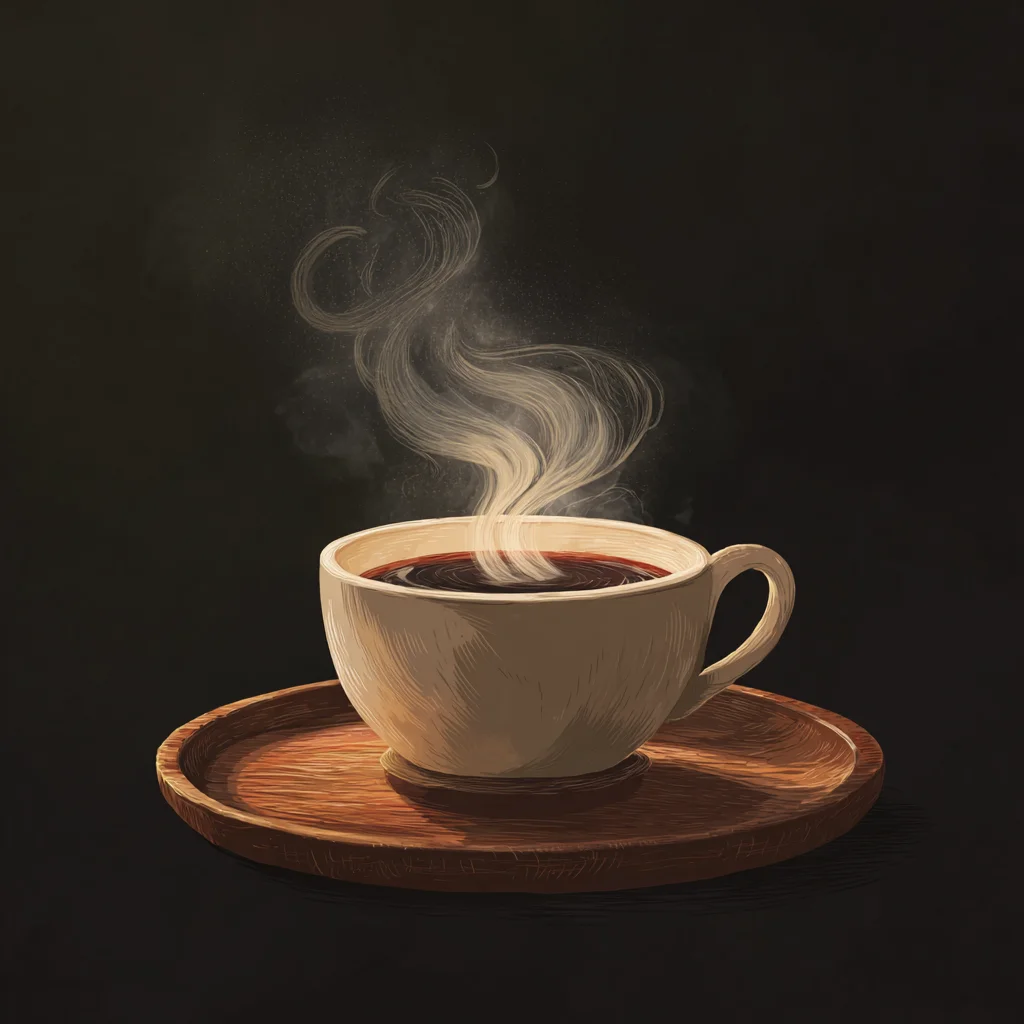
Coffee's cultural penetration, whilst more recent, has achieved a breadth and depth that would astonish those Ethiopian goat herders. The coffeehouse, or qahveh khaneh, emerged in the Ottoman Empire as a centre of intellectual discourse, earning these establishments the epithet schools of the wise. By the 17th century, London boasted over 3,000 coffeehouses, serving as incubators for institutions including Lloyd's of London and the London Stock Exchange.
The modern world has elevated coffee to the status of secular sacrament. Office workers speak of needing their morning coffee with the fervour of addicts, which, biochemically speaking, they are. The coffee break has been enshrined in labour law across multiple nations. Entire economies, from Brazil to Ethiopia to Vietnam, depend upon the global coffee trade, which generates approximately $495 billion annually. The snake commands no comparable commercial empire.
Perhaps most remarkably, coffee has achieved the rare distinction of universal acceptability. Whilst approximately 100,000 people die annually from snakebite worldwide, no person has ever been admitted to hospital following an unprovoked espresso attack. This safety profile has enabled coffee to become the second most traded commodity on Earth after petroleum. Society has collectively decided that coffee may be loved without reservation, whilst the snake must always be approached with caution.