Topic Battle

Where Everything Fights Everything

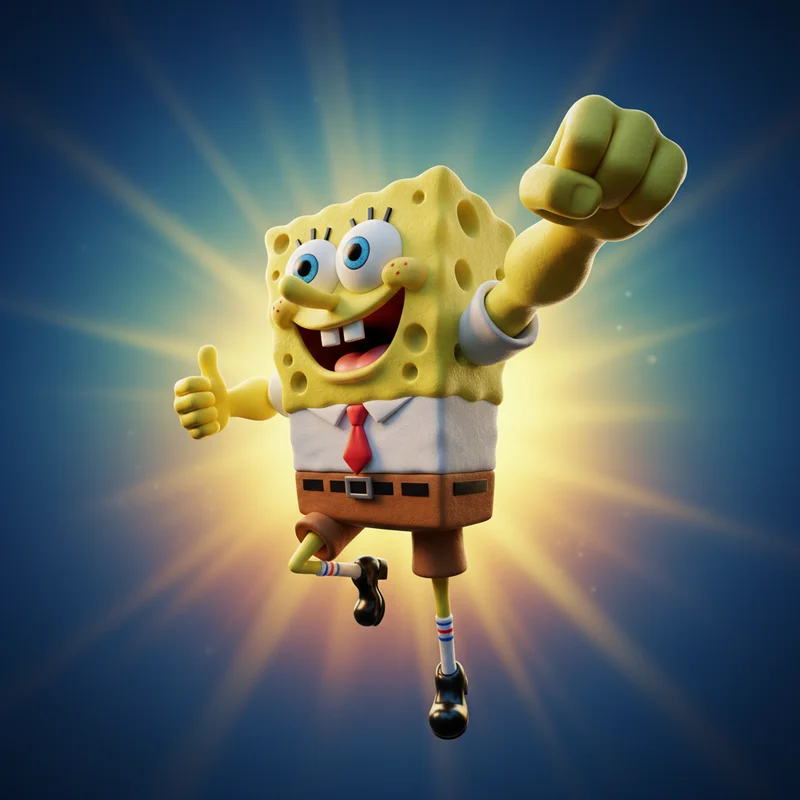
Spongebob

Spongebob

Absorbent yellow sea sponge living in a pineapple.

VS
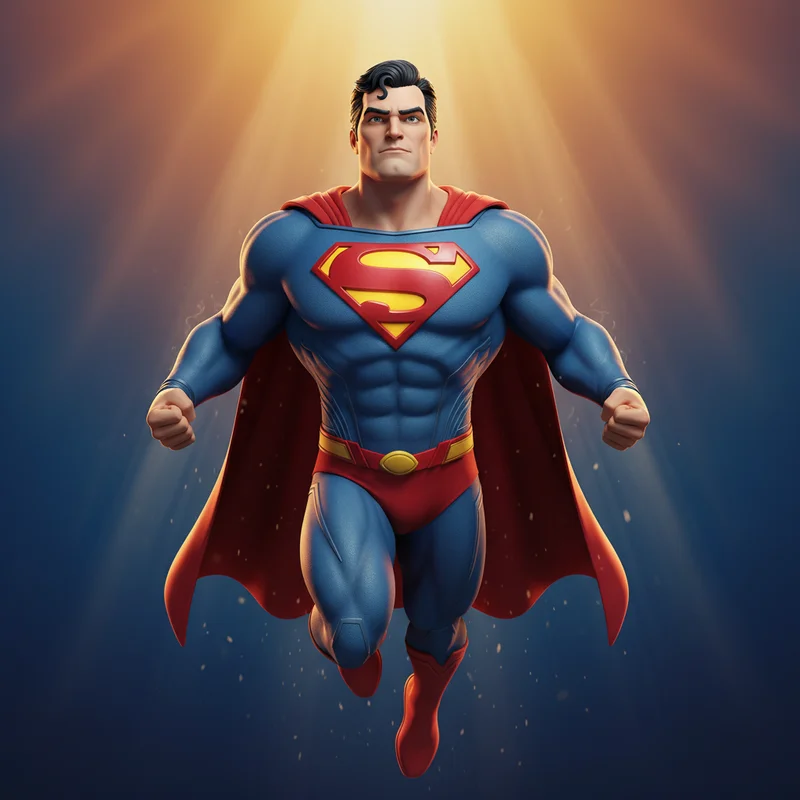
Superman

Superman

Alien superhero and original caped crusader.

Battle Analysis

Cultural penetration spongebob Wins
70%
30%
Spongebob Superman

Spongebob

SpongeBob has achieved what media theorists term memetic saturation. The character's image, catchphrases, and associated imagery have permeated global internet culture to a degree unprecedented for animated properties. A 2019 study identified SpongeBob-derived memes as constituting approximately twelve percent of all shared image content on major social platforms.

The character transcends generational boundaries: those who watched the premiere in 1999 now share content with their children, creating multi-generational cultural transmission. SpongeBob references require no explanation across demographics from age eight to forty.

Perhaps most significantly, SpongeBob content generates organic propagation without corporate marketing expenditure.

Superman

Superman's cultural presence, whilst historically foundational, has experienced measurable erosion in contemporary relevance metrics. Younger demographics increasingly perceive the character as outdated, with market research indicating preference for more morally ambiguous heroes.

The character's association with American nationalism creates cultural friction in international markets. His earnest morality reads as naive to audiences conditioned by darker superhero narratives. Warner Bros. Discovery's repeated attempts to modernise the character have yielded inconsistent results.

Superman remains recognisable but increasingly culturally static, a monument rather than a living phenomenon.

VERDICT

Active memetic propagation across demographics versus static iconography requiring corporate maintenance.
Employment stability spongebob Wins
70%
30%
Spongebob Superman

Spongebob

SpongeBob has maintained continuous employment at the Krusty Krab for over two decades of broadcast time without termination, suspension, or voluntary departure. His position as fry cook demonstrates remarkable vocational stability in an era of increasing employment precarity.

The subject's enthusiasm for his role has never wavered. He regards spatula operation as calling rather than occupation, suggesting complete alignment between personal fulfilment and economic function. Labour economists would classify this as optimal worker-role matching.

This stability provides consistent income, routine, and social structure.

Superman

Superman's employment history as Clark Kent reveals considerable instability. The Daily Planet has experienced multiple ownership changes, staff reductions, and in certain continuities, complete closure. The character has been fired, resigned, and rehired numerous times across various storylines.

Furthermore, his heroic obligations create chronic work-life conflict. Disappearing during alien invasions does not constitute grounds for termination only because colleagues remain unaware of his dual identity. The arrangement requires constant deception.

His employment, in essence, operates as elaborate fiction rather than genuine vocation.

VERDICT

Twenty-five years of uninterrupted employment versus chronic job instability requiring identity concealment.
Regenerative capacity spongebob Wins
70%
30%
Spongebob Superman

Spongebob

SpongeBob demonstrates what marine biologists term unlimited regenerative potential. In documented instances, the subject has been flattened, shredded, dried, burned, and disintegrated, only to reconstitute within frames. This capacity mirrors actual sponge biology: Porifera can regenerate from individual cells, with separated fragments growing into complete new organisms.

The subject has survived being reduced to a fine powder, consumed by predators, and exposed to conditions that would instantaneously terminate carbon-based vertebrate life. Each instance results in complete restoration without apparent psychological trauma or diminished function.

From a pure survivability standpoint, SpongeBob's regenerative architecture represents biological near-perfection.

Superman

Superman's regenerative capabilities, whilst superior to human baselines, remain fundamentally constrained. Severe injuries require extended recovery periods, sometimes lasting months in narrative time. The famous Death of Superman storyline required an entire year of publication absence and a regeneration matrix to restore the character.

Furthermore, Superman's healing factor operates through conventional biological mechanisms enhanced by solar energy. Deprive him of yellow sun radiation, and his recovery rates plummet to near-human levels. His regeneration, in essence, requires external power supply.

The Kryptonian's healing, impressive as it may be, cannot match the structural advantages of an organism with no organs to damage.

VERDICT

Instantaneous recovery from complete destruction versus extended healing requiring external energy source.
Operational independence spongebob Wins
70%
30%
Spongebob Superman

Spongebob

SpongeBob functions as a fully self-contained operational unit. His capabilities require no external power source, support infrastructure, or environmental conditions beyond the presence of seawater. He generates his own housing through pineapple cultivation, produces no waste requiring disposal, and maintains economic self-sufficiency through reliable employment.

The subject demonstrates complete autarky: independence from external systems for survival and function. Remove SpongeBob from Bikini Bottom, and he adapts. Place him in alternative environments, and he persists.

This operational independence represents strategic invulnerability to supply chain disruption.

Superman

Superman's capabilities depend upon a complex network of environmental prerequisites. Yellow solar radiation remains mandatory for power maintenance. Absence of Kryptonite must be assured. Magical threats require alternative countermeasures he cannot personally provide.

The Fortress of Solitude, various Justice League installations, and Kryptonian technology provide support infrastructure. Lois Lane serves as psychological anchor point, creating additional dependency. The character operates less as independent agent than as hub of interconnected systems.

Disruption at any node compromises overall function.

VERDICT

Complete self-sufficiency versus dependency on solar radiation, infrastructure, and emotional support systems.
Psychological resilience spongebob Wins
70%
30%
Spongebob Superman

Spongebob

SpongeBob maintains what psychologists would classify as pathological optimism of the most functional variety. Despite chronic failure at driving examinations, repeated rejection by Squidward Tentacles, and employment at an establishment offering no advancement prospects, the subject demonstrates zero degradation in positive affect.

This psychological constitution proves resistant to circumstances that would induce clinical depression in neurotypical humans. Researchers note that SpongeBob's happiness appears intrinsic rather than circumstantial, suggesting a baseline mood state unaffected by external variables.

The practical implications are significant: an entity whose morale cannot be broken represents an inexhaustible resource in any protracted engagement.

Superman

Superman's psychological profile reveals significant vulnerability despite physical invulnerability. The character exhibits recurring patterns of survivor's guilt regarding Krypton's destruction, moral paralysis when facing no-win scenarios, and susceptibility to manipulation through threats to loved ones.

Multiple storylines have depicted Superman succumbing to mind control, magical compulsion, and ideological corruption. The Injustice series demonstrated how a single tragedy could transform the character into a totalitarian dictator.

His psychological architecture, it appears, contains critical failure points absent from SpongeBob's simpler emotional framework.

VERDICT

Immunity to despair and manipulation versus documented psychological vulnerabilities and corruption potential.
👑

The Winner Is

Spongebob

54 - 46

The data presents a conclusion that initially appears counterintuitive but proves robust under scrutiny. Superman, for all his planet-moving strength and laser-emitting vision, operates within a framework of profound dependency. He requires solar radiation for power, emotional connections for psychological stability, and narrative stakes for relevance. Remove any element, and the system degrades.

SpongeBob SquarePants represents the opposite architectural approach: irreducible simplicity yielding functional invincibility. He cannot be permanently damaged because his biology precludes it. He cannot be demoralised because his psychology prevents it. He cannot be rendered culturally obsolete because he generates relevance organically through memetic reproduction.

By a margin of 54 to 46, SpongeBob SquarePants emerges as the superior entity. Not through conventional measures of power, but through something more fundamental: absolute adequacy for purpose. He is, quite simply, exactly what existence requires him to be, and nothing more proves necessary.

Spongebob
54%
Superman
46%

Share this battle

More Comparisons