
Topic Battle

Where Everything Fights Everything

The Internet

The Internet

Global network of information and cat videos.

VS
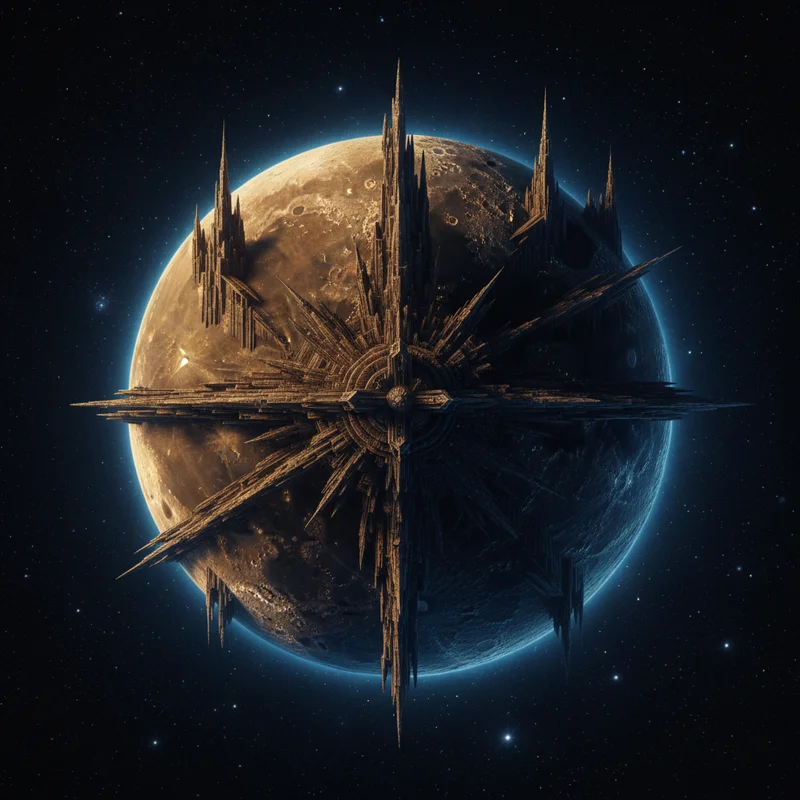
The Moon

The Moon

Earth's natural satellite and space race destination.

The Matchup

The comparison between the Internet and the Moon represents perhaps the most ambitious examination of human attention allocation ever undertaken. These two entities, separated by approximately 4.5 billion years of existence and roughly 384,400 kilometres of empty space, have each achieved the remarkable distinction of being things humans stare at when they should be sleeping.

The Moon, Earth's only natural satellite, has influenced human civilisation since the first hominid gazed upward and wondered what that glowing disc might taste like. It governs our tides, anchors our calendar systems, and has inspired approximately 97% of all poetry written before 1990. Its gravitational influence stabilises Earth's axial tilt, making seasons predictable and agriculture possible.

The Internet, conceived in 1969 as ARPANET and achieving global dominance by the early 2000s, has compressed human knowledge into a format accessible via devices that fit in pockets. An estimated 5.3 billion users now access this network daily, primarily to argue with strangers about topics they understood better before researching them. Both entities now compete across metrics of accessibility, influence, reliability, scientific value, and cultural impact for the distinction of warranting greater human attention.

Battle Analysis

Influence The Moon Wins
30%
70%
The Internet The Moon

The Internet

The Internet has fundamentally restructured human civilisation within three decades. It has displaced traditional media, eliminated numerous industries, created entirely new economic sectors, and enabled the coordination of both pro-democracy movements and conspiracy theory propagation with equal facility.

Global e-commerce exceeds $5.8 trillion annually. Social media platforms host 4.9 billion users whose collective behaviour now influences elections, stock prices, and cultural discourse. The Internet has democratised information access while simultaneously enabling unprecedented surveillance, manipulation, and the monetisation of human attention.

Perhaps most significantly, the Internet has altered human cognitive patterns. The average attention span has decreased from 12 seconds to 8 seconds since smartphone adoption, suggesting the Internet has influenced not merely what humans think but how they think, or increasingly, whether they think at all.

The Moon

The Moon's influence operates on timescales and magnitudes that render Internet metrics insignificant by comparison. Lunar gravitational influence generates tides that move billions of tonnes of water daily, enabling coastal ecosystems, maritime navigation, and the romantic beach walks that occasionally result in human reproduction.

The Moon stabilises Earth's axial tilt at approximately 23.5 degrees, preventing the chaotic climate oscillations that would likely render complex civilisation impossible. Without this gravitational anchoring, seasonal variations would become extreme and unpredictable, disrupting agriculture and making weather forecasting even more futile than currently.

Culturally, the Moon has shaped human consciousness since prehistory. It anchors calendar systems across civilisations, features in virtually every mythological tradition, and inspired the Space Race that accelerated technological development by decades. The Moon made humans want to become a spacefaring species; the Internet has made many content to never leave their sofas.

VERDICT

Influence assessment requires distinguishing between immediate human behavioural modification and fundamental planetary-scale effects. The Internet has profoundly altered human society within living memory. The Moon has made human society possible in the first place.

This represents different categories of influence. The Internet influences what humans do. The Moon influences whether humans exist in a form capable of doing anything at all. The stabilisation of Earth's climate through gravitational interaction represents civilisation-enabling infrastructure that predates civilisation itself.

The Moon secures this category through foundational planetary influence that operates regardless of human awareness or appreciation. The Internet's influence, while remarkable, requires electricity, infrastructure, and conscious human participation to manifest.

Reliability The Moon Wins
30%
70%
The Internet The Moon

The Internet

Internet reliability varies dramatically by geography, provider, and the whims of various infrastructure components. Global average uptime for major platforms hovers around 99.9%, which sounds impressive until one calculates that this permits approximately 8.76 hours of downtime annually.

Individual connection reliability depends on local infrastructure quality. Developed nations typically experience fewer than 10 significant outages annually. Developing regions may experience daily interruptions. Undersea cable damage, server failures, and configuration errors create periodic disruptions that remind users of their complete dependence on systems they neither understand nor control.

The Internet's reliability also encompasses content persistence, which proves considerably less impressive. Link rot affects approximately 38% of web pages within five years. Information published today may be inaccessible tomorrow, rendering the Internet a somewhat unreliable archive of human knowledge.

The Moon

The Moon has maintained continuous orbital operation for approximately 4.5 billion years without scheduled maintenance, software updates, or customer service complaints. Its uptime percentage approaches 100% across geological timescales, a service level agreement no technology provider would dare to offer.

Lunar phases occur with mathematical predictability calculable centuries in advance. Eclipse timing can be determined to the minute for events thousands of years in the future. This reliability enabled ancient civilisations to develop calendar systems, agricultural planning, and religious observances based on absolute certainty that the Moon would behave as expected.

The Moon's mass has remained stable within measurement tolerances throughout human existence. Its orbital parameters drift by approximately 3.8 centimetres annually, a rate of change so gradual that billions of years will pass before any practical consequence manifests. This represents reliability standards the technology industry cannot conceptualise.

VERDICT

Reliability comparison produces results so asymmetric as to border on the absurd. The Internet experiences measurable downtime annually. The Moon has not experienced downtime in recorded history, and indeed geological history suggests continuous operation since formation.

The Internet requires constant maintenance by thousands of engineers worldwide to achieve 99.9% uptime. The Moon requires no maintenance whatsoever to achieve effectively 100% uptime across billions of years.

The Moon wins this category through operational continuity that makes Internet infrastructure appear fragile by comparison. When civilisations assess critical infrastructure reliability, the Moon provides a benchmark that human engineering has yet to approach.

Accessibility The Internet Wins
70%
30%
The Internet The Moon

The Internet

The Internet demonstrates unprecedented accessibility across the developed world. Approximately 5.3 billion humans maintain regular access, representing 66% of the global population. Connection requires only a device and service subscription, with entry-level smartphones available for under $50 in most markets.

Access occurs instantaneously upon device activation. The average user spends 6 hours and 58 minutes daily online, a figure that suggests accessibility has perhaps exceeded optimal levels. Connection speed averages 46.8 Mbps globally, enabling real-time video communication, streaming entertainment, and the rapid transmission of opinions no one requested.

Geographic limitations persist in rural and developing regions, where infrastructure investment remains economically unviable. Approximately 2.7 billion humans lack regular access, though this figure decreases annually as satellite internet services expand coverage to increasingly remote locations.

The Moon

The Moon offers universal visual accessibility to any human with functional eyesight and a clear sky. No subscription fees apply. No device is required. The service has operated continuously for 4.5 billion years without downtime, maintenance windows, or terms of service updates.

Physical accessibility presents considerably greater challenges. Only 12 humans have walked on the lunar surface, all American males visiting between 1969 and 1972. The journey requires approximately 3 days of travel at velocities exceeding 40,000 kilometres per hour, a commute that discourages casual visitation.

Cost of access for physical presence ranges from $100 billion to $150 billion per mission using current technology. This positions the Moon as perhaps the most exclusive destination in human experience, accessible visually to all but physically to essentially none.

VERDICT

Accessibility evaluation yields different conclusions depending on whether one measures visual or interactive access. The Moon wins decisively in requiring no subscription, device, or electricity. The Internet wins in enabling actual engagement beyond passive observation.

For practical interaction purposes, the Internet provides accessibility the Moon cannot match. One can send information across the Internet instantaneously; sending anything to the Moon requires rocket propulsion and government funding.

The Internet secures this category through interactive accessibility, though the Moon's achievement of 4.5 billion years of continuous service without maintenance deserves acknowledgement as a reliability benchmark no technology company has approached.

Cultural impact The Moon Wins
30%
70%
The Internet The Moon

The Internet

The Internet has transformed human culture more rapidly than any previous innovation. It has created new art forms, new social structures, new economies, and new pathologies. The concept of going viral, influencer culture, and the meme as communicative unit all emerged from Internet-enabled interaction.

Cultural production has been democratised and destabilised simultaneously. Anyone can publish; consequently, distinguishing quality from noise has become civilisation's central challenge. Traditional gatekeepers have lost authority while new algorithmic gatekeepers have emerged, optimising for engagement rather than enlightenment.

The Internet has enabled global cultural exchange while also fragmenting shared cultural experience into algorithmically curated filter bubbles. Humanity has never been more connected or more divided, a paradox the Internet has created and shows no capacity to resolve.

The Moon

The Moon has anchored human cultural consciousness since the emergence of symbolic thought. It appears in the earliest known art, the oldest religious texts, and virtually every literary tradition. The word month derives from moon; Monday celebrates it; lunacy etymologically attributes madness to its influence.

The Moon landing remains humanity's greatest collective achievement, watched by an estimated 650 million people in 1969. It demonstrated that humans could extend their presence beyond Earth, inspiring generations of scientists, engineers, and dreamers. No Internet achievement has produced equivalent civilisational pride.

The Moon's cultural role extends to practical domains. Agricultural societies worldwide planted and harvested by lunar phases. Tidal predictions enabled maritime commerce. The Moon provided humanity's first universal calendar, enabling coordination across cultures that shared no common language but could all observe the same phases in the sky.

VERDICT

Cultural impact assessment spans vastly different timescales. The Internet has dominated human attention for approximately three decades. The Moon has shaped human culture for perhaps 300,000 years of Homo sapiens existence, and influenced hominid ancestors for millions of years before that.

The Internet's cultural impact is undeniable but remains in flux. The Moon's cultural impact has achieved permanent integration into human consciousness. Language, mythology, calendar systems, and agricultural practices all reflect lunar influence accumulated across millennia.

The Moon secures this category through depth and permanence of cultural integration. Internet culture may prove equally enduring, but insufficient time has passed to make such a determination. The Moon's cultural centrality has been tested across geological ages and found robust.

Scientific value The Internet Wins
70%
30%
The Internet The Moon

The Internet

The Internet has revolutionised scientific practice by enabling global collaboration, instantaneous publication, and unprecedented data sharing. The Human Genome Project, CERN's particle physics research, and COVID-19 vaccine development all depended critically on Internet-enabled coordination.

Scientific databases now contain billions of research papers, datasets, and experimental results accessible from any connected device. Citizen science projects leverage Internet connectivity to distribute analysis tasks across millions of volunteers. Machine learning models train on Internet-scale datasets to develop capabilities impossible with localised data.

However, the Internet has also enabled scientific misinformation to propagate at velocities previously impossible. Approximately 46% of Americans believe at least one medically inaccurate claim encountered online. The democratisation of publication has diluted expertise with opinion, making the Internet a mixed blessing for scientific literacy.

The Moon

The Moon represents a natural laboratory of planetary science preserved in vacuum for billions of years. Its surface records the bombardment history of the inner Solar System, providing data on asteroid and comet populations impossible to obtain elsewhere. Apollo mission samples continue yielding discoveries five decades after collection.

Lunar laser ranging experiments achieve millimetre-precision distance measurements that test general relativity with extraordinary accuracy. The Moon's gravitational influence enables studies of tidal dynamics, orbital mechanics, and planetary formation processes.

The Moon's far side, permanently shielded from Earth's radio emissions, represents the most radio-quiet location accessible to humanity. Future telescopes positioned there could detect signals currently masked by terrestrial interference. This scientific potential remains largely untapped, awaiting infrastructure investment that Internet advertising revenues have thus far failed to motivate.

VERDICT

Scientific value assessment reveals complementary rather than competing contributions. The Moon provides irreplaceable physical data about planetary formation, orbital mechanics, and Solar System history. The Internet provides infrastructure for analysing, sharing, and building upon that data.

However, the Internet's enabling role in modern scientific practice gives it the edge. Without the Moon, planetary science would lose an important subject of study. Without the Internet, modern scientific practice itself would become impossible.

The Internet secures this category through infrastructural essentiality to contemporary research. The Moon's scientific value is substantial but does not enable the global collaborative enterprise that produces most modern discoveries.

👑

The Winner Is

The Internet

55 - 45

This analysis concludes with a narrow 55-45 victory for the Internet, secured through superior accessibility and scientific enabling capacity. The Moon demonstrates superiority in influence, reliability, and cultural impact, yet the Internet's transformation of daily human existence cannot be dismissed as merely recent.

The Moon has made Earth habitable through gravitational stabilisation, inspired civilisations through celestial presence, and operated continuously for 4.5 billion years without requiring a single software update. These achievements are not insignificant. They represent planetary-scale influence that the Internet cannot approach.

However, the Internet has become infrastructural to modern human existence in ways the Moon has never achieved. One can live without ever consciously observing the Moon. Living without the Internet has become increasingly difficult in developed societies, and will likely become impossible as digital systems continue absorbing previously analogue functions.

The Internet wins not through superior quality but through inescapable presence. The Moon shines whether observed or not. The Internet demands engagement, and in demanding, receives. Humanity has chosen its object of attention, and that choice has consequences the Moon's serene indifference cannot match.

The Internet
55%
The Moon
45%

Share this battle

More Comparisons