
Topic Battle

Where Everything Fights Everything

Thor

Thor

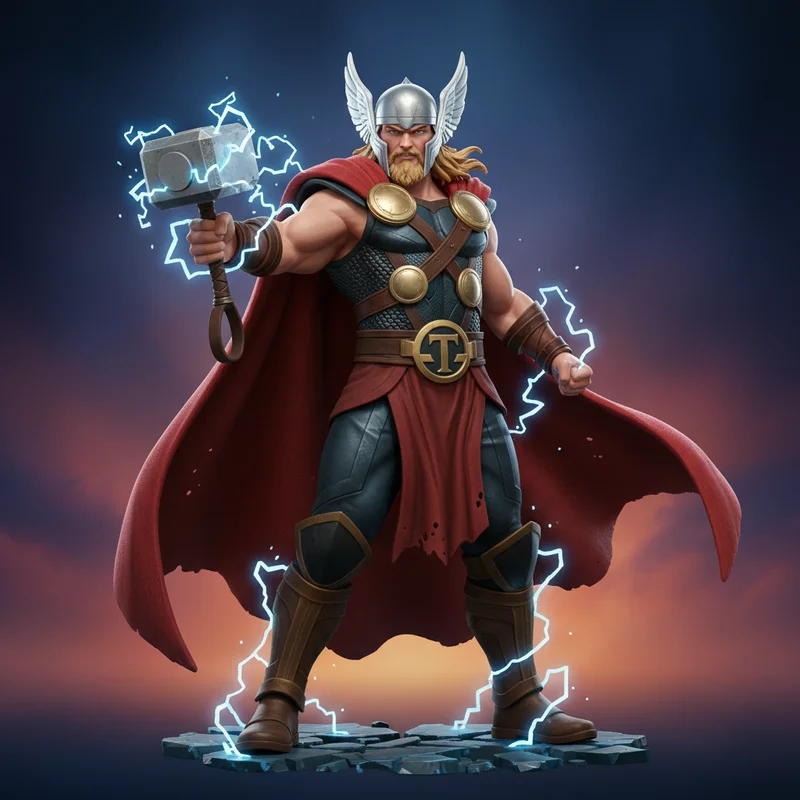
Norse god of thunder wielding Mjolnir.

VS
Volcano

Volcano

Mountain that occasionally reminds us Earth is angry.

Battle Analysis

Longevity Volcano Wins
30%
70%
Thor Volcano

Thor

Thor's documented history extends approximately 1,200 years, from early Germanic religious practices through Viking expansion and subsequent Christianisation. The character experienced a revival in the 19th century through Wagner and the Romantics, before Marvel's 1962 comic introduction initiated the current era of dominance.

Whether Thor will remain culturally relevant in another millennium depends entirely upon human choice and entertainment industry economics. Gods, historically, have proven rather mortal when worship ceases.

Volcano

Volcanic activity has shaped Earth for approximately four billion years. The oldest known volcanic rocks predate multicellular life by billions of years. Volcanoes created Earth's atmosphere, its oceans, and the landmasses upon which civilisation eventually emerged.

They will continue erupting long after humanity has departed, reshaping continents with complete indifference to whether anyone remains to witness their spectacle. Time scales measured in geological epochs render human mythology momentary.

VERDICT

Four billion years of documented activity versus twelve centuries of mythological relevance
Raw power Volcano Wins
30%
70%
Thor Volcano

Thor

The Mjolnir-wielding Asgardian demonstrates power levels that vary considerably depending upon the source material consulted. In the original Eddas, Thor's strength is sufficient to slay the World Serpent, though the effort proves fatal. Marvel's interpretation escalates this considerably, depicting Thor channelling enough electrical energy to stagger cosmic entities and destroy spacecraft.

Peak lightning bolts on Earth deliver approximately one billion joules of energy, a figure Thor ostensibly exceeds by several orders of magnitude. However, this power remains entirely fictional, existing only in the imaginations of devoted followers and cinema audiences alike. One cannot, regrettably, power a city with narrative convention.

Volcano

A single volcanic eruption releases energy equivalent to multiple thermonuclear weapons. The 1980 Mount St. Helens eruption discharged approximately 24 megatons of thermal energy, whilst the Krakatoa event of 1883 produced an estimated 200 megatons, creating a sound audible 4,800 kilometres distant.

Supervolcanic eruptions, such as the Yellowstone caldera's historical events, have released thousands of cubic kilometres of material, causing global climate disruption lasting decades. This power is not theoretical, speculative, or dependent upon audience suspension of disbelief. It is merely waiting, patiently, in chambers of molten rock beneath our feet.

VERDICT

Volcanic energy output is quantifiable, documented, and genuinely terrifying in ways fiction cannot replicate
Practical utility Volcano Wins
30%
70%
Thor Volcano

Thor

The practical applications of Thor are, one must confess, somewhat limited. As a fictional entity, Thor cannot be deployed to generate electricity, though one imagines energy companies have investigated the possibility. His mythological function as a protector of humanity against chaos offers psychological comfort rather than measurable utility.

The Thor brand does employ thousands in the entertainment industry and inspires fitness regimens amongst admirers of Chris Hemsworth's physique. These contributions, whilst economically real, pale against more tangible geological benefits.

Volcano

Volcanic processes have provided humanity with obsidian for tools, pumice for construction, and geothermal energy for heating and electricity generation. Iceland derives nearly 100 percent of its heating from volcanic activity, whilst geothermal plants worldwide produce reliable, renewable energy.

Volcanic soils support coffee cultivation in Central America, wine production in Italy, and rice paddies across Indonesia. The mineral wealth deposited by volcanic processes includes gold, silver, copper, and diamonds. Thor offers entertainment; volcanoes offer civilisation's material foundation.

VERDICT

Geothermal energy, fertile soils, and mineral deposits provide tangible benefits mythology cannot match
Cultural influence Thor Wins
70%
30%
Thor Volcano

Thor

From the Prose Edda to the Marvel Cinematic Universe, Thor has undergone perhaps the most commercially successful mythological transformation in human history. The character has generated over three billion dollars in theatrical revenue alone, whilst inspiring everything from heavy metal bands to Thursday's etymological origins.

Thor represents humanity's enduring fascination with divine intervention, the comforting notion that somewhere above the clouds, a powerful figure might occasionally concern himself with mortal affairs. This influence extends across literature, art, video games, and the tattoo preferences of a surprising number of fitness enthusiasts.

Volcano

Volcanoes have inspired religious devotion across every major civilisation that encountered them. Vulcan, Pele, and countless other deities emerged from humanity's attempt to comprehend mountains that breathed fire. The destruction of Pompeii became the ancient world's most documented catastrophe, preserving daily Roman life in tragic detail.

Yet volcanoes also enabled civilisation itself. The exceptionally fertile soils surrounding volcanic regions supported early agriculture, whilst volcanic islands like Hawaii and Iceland created unique cultural laboratories. Their influence, unlike Thor's, requires no marketing budget to sustain.

VERDICT

Thor's modern multimedia empire reaches billions, transforming ancient myth into contemporary cultural currency
Aesthetic spectacle Volcano Wins
30%
70%
Thor Volcano

Thor

Thor's visual representation has evolved from crude Viking carvings to photorealistic CGI rendering at 8K resolution. The character's iconic imagery, red cape billowing whilst lightning cascades from an upraised hammer, has achieved near-universal recognition in contemporary visual culture.

Marvel's interpretation alone has produced hundreds of hours of meticulously crafted spectacle, each thunder strike designed by teams of artists to maximise audience impact. The aesthetic of Thor is humanity's idealised vision of divine power made visually manifest.

Volcano

Nothing humanity has ever created can match the pure visual majesty of a volcanic eruption. Rivers of incandescent lava flowing against night skies, pyroclastic clouds ascending to the stratosphere, lightning storms generated within ash columns, these are sights that reduce observers to speechless reverence.

The eruption of Eyjafjallajokull in 2010 produced images that circulated globally, not through marketing campaigns but through sheer aesthetic compulsion. Nature's special effects budget remains, thankfully, unlimited.

VERDICT

Real incandescent lava and ash plumes achieve sublimity that CGI thunder can only approximate
👑

The Winner Is

Volcano

42 - 58

In the final analysis, Volcano prevails with a decisive 58 to 42 victory over the God of Thunder. This outcome reflects the fundamental asymmetry between mythology and geology: one requires human belief to exist, whilst the other will continue reshaping our planet regardless of whether anyone remains to name it.

Thor's cultural influence is undeniably impressive, transforming from a regional deity into a global entertainment phenomenon. Yet this influence depends entirely upon continued human attention and corporate investment. Volcanoes require neither.

The practical utility comparison proves particularly decisive. Whilst Thor offers psychological comfort and entertainment industry employment, volcanoes have provided the material foundation upon which civilisation rests, from fertile soils to geothermal energy to the very atmosphere we breathe.

Thor
42%
Volcano
58%

Share this battle

More Comparisons