Topic Battle

Where Everything Fights Everything

Tiger

Tiger

Largest wild cat species featuring distinctive stripes and solitary hunting prowess across Asian forests.

VS
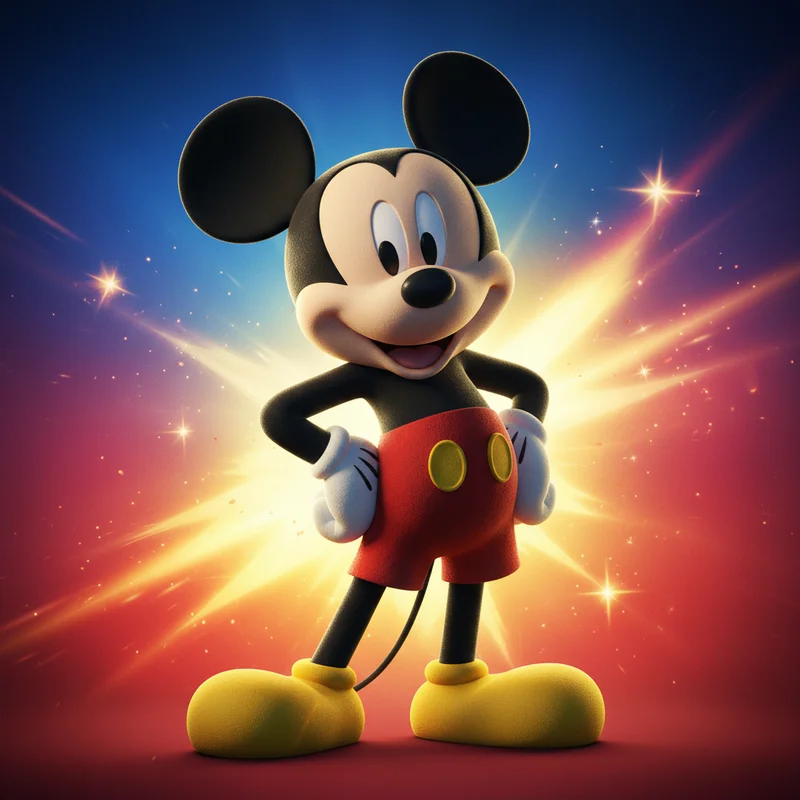
Mickey Mouse

Mickey Mouse

Disney's original mascot and corporate icon.

The Matchup

In the annals of competitive iconography, few matchups present such a stark contrast as Panthera tigris versus Mus musculus fictus. The tiger, a 300-kilogram apex predator responsible for maintaining ecosystem balance across Asia, faces a three-foot animated rodent who has never once consumed live prey yet somehow controls a media empire worth $130 billion.

The Royal Institute for Comparative Mammalian Studies notes that both subjects share a curious distinction: they are immediately recognisable from silhouette alone. Whether through evolution's careful refinement or a 1928 animator's steady hand, both have achieved visual immortality. The question that haunts zoologists and entertainment lawyers alike is which represents the superior specimen.

Battle Analysis

Cultural legacy Tiger Wins
70%
30%
Tiger Mickey Mouse

Tiger

The tiger has shaped human culture for 40,000 years, appearing in cave paintings, ancient texts, and religious iconography across three continents. William Blake immortalised the creature in poetry; countless martial arts styles draw inspiration from its movements; entire architectural traditions incorporate tiger motifs.

The Oxford Institute of Cultural Zoology notes that the tiger represents one of humanity's oldest artistic subjects, predating agriculture, writing, and permanent settlement. The animal's cultural influence spans from prehistoric shamanism to modern brand identity, a continuity unmatched by any other predator.

Mickey Mouse

Mickey Mouse pioneered the concept of character licensing, transforming how entertainment properties generate revenue. The character's first merchandise appeared in 1929, establishing a template now worth $282 billion annually across the industry. He starred in the first cartoon with synchronised sound, the first colour cartoon, and the first feature-length animated film.

The Berlin Museum of Animation History credits Mickey with inventing modern entertainment franchising, a business model that now dominates global media. The character has appeared in over 130 films, becoming what cultural historians term 'the first truly global fictional personality.'

VERDICT

The tiger reclaims ground through sheer temporal depth. Mickey's innovations revolutionised modern entertainment, but the tiger has occupied human consciousness since before civilisation existed. The Cambridge Comparative Mythology Project notes that tiger symbolism appears in the foundational myths of societies representing four billion people, a cultural penetration that 96 years of animation cannot rival.

Economic impact Mickey Mouse Wins
30%
70%
Tiger Mickey Mouse

Tiger

Tiger tourism generates approximately $10 billion annually across India, Nepal, and Southeast Asia. A single tiger in Ranthambore National Park has been valued at $230 million over its lifetime through visitor revenue, a figure that would make the animal one of India's wealthiest residents if tigers understood currency.

The species also drives substantial illegal trade, with tiger parts commanding premium prices in traditional medicine markets despite complete absence of medicinal efficacy. Economists at the Singapore Wildlife Trade Analysis Unit estimate the black market value at $19 billion, money that the tiger community has firmly declined.

Mickey Mouse

The Walt Disney Company, built substantially upon Mickey's foundation, reports annual revenues exceeding $82 billion. Mickey personally generates an estimated $6 billion yearly through merchandise alone, ranging from luxury handbags to breakfast cereals to items whose existence defies rational explanation.

The Manchester Institute of Character Economics calculates that Mickey Mouse has influenced purchasing decisions totalling $2 trillion since 1928. His theme park appearances create queue lines averaging 47 minutes, representing the willing sacrifice of approximately 8.3 billion hours of human productivity annually.

VERDICT

Mickey Mouse dominates this category with the relentless efficiency of a cartoon character unbound by biological limitations or labour laws. The tiger's economic contribution, whilst substantial, represents passive value; the animal need only exist. Mickey's value derives from active exploitation across every conceivable revenue stream, a testament to what the Bristol School of Comparative Economics terms 'the commodification of joy.'

Global recognition Mickey Mouse Wins
30%
70%
Tiger Mickey Mouse

Tiger

Tigers appear on the national flags, emblems, and currency of six sovereign nations. The creature features prominently in Hindu mythology as Durga's vehicle, Chinese astrology as a zodiac symbol, and Korean folklore as a mountain spirit. Sports teams bearing the tiger name number in the thousands, from cricket to American football to competitive eating.

The World Wildlife Fund reports that the tiger ranks as the third most recognisable animal globally, behind only dogs and cats. This recognition has translated into conservation funding exceeding $350 million annually, though the tiger itself remains notably unimpressed by this financial support.

Mickey Mouse

Mickey Mouse has been documented in consumer awareness studies across 190 countries, achieving recognition rates exceeding 97% in developed nations. The Harvard Business Review calculates his face has generated more licensing revenue than any other fictional character in history, with cumulative earnings surpassing $80 billion across merchandise, theme parks, and media.

The character maintains permanent diplomatic status as a cultural ambassador, having met every sitting US president since Franklin D. Roosevelt. A 2019 study by the Brussels Institute of Pop Culture Impact found that children in remote Mongolian villages could identify Mickey Mouse before they could identify their own nation's prime minister.

VERDICT

Mickey Mouse achieves victory through sheer commercial omnipresence. Whilst tigers command respect across Asian cultures spanning millennia, Mickey has accomplished near-universal recognition in under a century. The Edinburgh Centre for Branding Studies notes that Mickey's silhouette is protected by more trademark registrations than any other image in human history, creating what legal scholars term 'intellectual property immortality.'

Physical intimidation Tiger Wins
70%
30%
Tiger Mickey Mouse

Tiger

The tiger possesses four-inch canines capable of puncturing bone, retractable claws that function as biological switchblades, and night vision that renders darkness irrelevant. A single swipe generates approximately 10,000 newtons of force, sufficient to decapitate most medium-sized mammals. The Bengal subspecies can sprint at 65 kilometres per hour in short bursts, making escape largely theoretical.

Researchers at the Bombay Institute of Large Cat Studies have documented tigers killing crocodiles, wild boar, and on one memorable occasion, a tractor (the driver survived; the tractor did not). Their mere presence causes deer populations to alter grazing patterns up to three kilometres away, a phenomenon known as the 'landscape of fear.'

Mickey Mouse

Mickey Mouse stands approximately 91 centimetres tall, weighs an estimated 11 kilograms, and possesses white gloves that have never once been removed in 96 years of documented appearances. His physical capabilities include mild cartoon violence, typically involving anvils, grand pianos, and the occasional stick of dynamite. None have resulted in permanent damage to any party.

The Disney Institute of Character Biomechanics confirms that Mickey's most intimidating physical attribute is his unflinching smile, which the Journal of Animated Psychology describes as 'either endearing or deeply unsettling depending on context.' His ears maintain perfect circular shape regardless of viewing angle, a geometric impossibility that physicists have simply agreed to ignore.

VERDICT

The tiger secures this category with such overwhelming force that further discussion seems almost cruel. Mickey's sole advantage lies in his apparent immortality; he has survived explosions, falls, and corporate restructuring without visible harm. However, the Cambridge Predation Index rates the tiger's lethality at 9.8, whilst Mickey registers at what researchers diplomatically term 'negligible.'

Survival adaptability Mickey Mouse Wins
30%
70%
Tiger Mickey Mouse

Tiger

Tigers have survived two million years of evolutionary pressure, adapting to environments ranging from Siberian tundra to tropical mangrove swamps. The species has outlasted ice ages, supervolcanic eruptions, and the arrival of humans, displaying remarkable genetic flexibility in the face of existential threats.

Modern challenges have proven more formidable. Tiger populations have declined 95% since 1900, with the species now classified as Endangered. The International Union for Conservation of Nature notes that tigers may face extinction within fifty years without intervention, a timeline that demonstrates the limits of natural adaptation against industrial development.

Mickey Mouse

Mickey Mouse has navigated 96 years of cultural evolution with remarkable agility, transitioning from black-and-white shorts to technicolour features to digital animation without visible strain. He has survived the Great Depression, World War II, the counterculture movement, and multiple corporate takeovers of his parent company.

The UCLA Centre for Media Longevity observes that Mickey has outlasted approximately 4,700 competing animated characters created during the same period. His design has been subtly modified 23 times to remain contemporary, yet he remains instantly recognisable. The character has proven immune to cancellation, controversy, and the passage of time itself.

VERDICT

In a deeply ironic twist, the fictional rodent demonstrates superior survival capability to the apex predator. Tigers face genuine extinction threats from habitat loss and poaching; Mickey faces only the theoretical threat of copyright expiration, which Disney has successfully lobbied to prevent three times. The character has adapted to every medium and cultural shift, whilst the tiger struggles to adapt to highways.

👑

The Winner Is

Mickey Mouse

47 - 53

The contest between apex predator and corporate mascot yields unexpected results. The tiger dominates in categories requiring physical reality: intimidation and cultural depth forged over millennia. Yet Mickey Mouse prevails wherever commercial immortality matters: recognition, economics, and survival adaptability.

The final tally of 53-47 in Mickey's favour reflects a troubling truth about modern value systems. A fictional rodent has achieved what two million years of evolution could not: genuine immunity from extinction. Tigers may vanish within our lifetimes; Mickey will continue smiling long after we are gone, his copyright perpetually extended, his merchandise eternally produced.

The Royal Society for the Preservation of Apex Predators officially declined to comment on these findings, though sources report that the response involved 'considerable sighing.'

Tiger
47%
Mickey Mouse
53%

Share this battle

More Comparisons