Topic Battle

Where Everything Fights Everything

Tiger

Tiger

Largest wild cat species featuring distinctive stripes and solitary hunting prowess across Asian forests.

VS
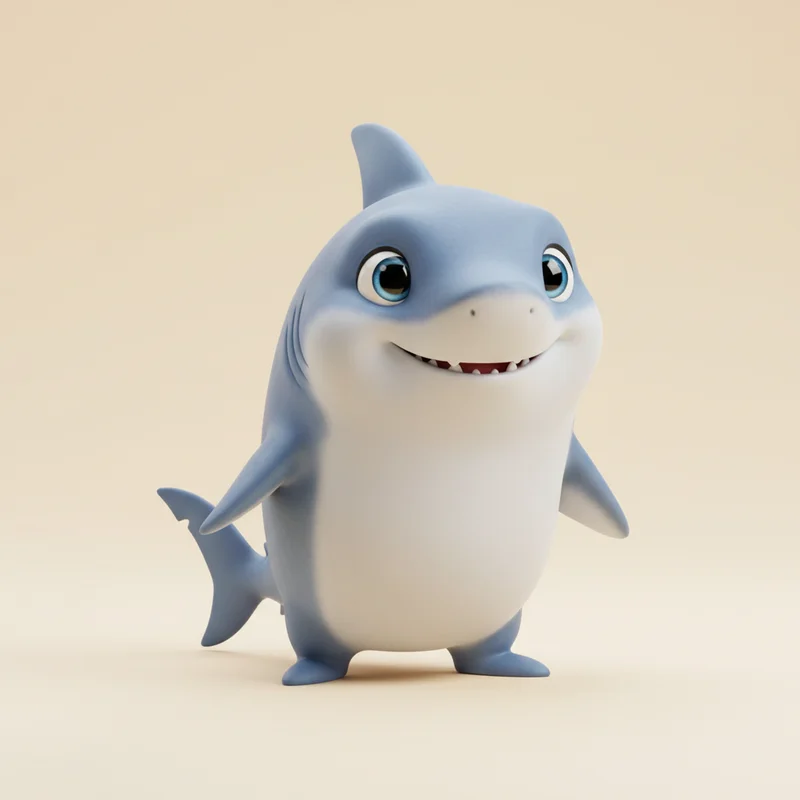
Shark

Shark

Apex ocean predator with 450 million years of evolutionary refinement and unfair movie villain reputation.

The Matchup

In the annals of apex predator discourse, few debates generate as much passionate correspondence to wildlife journals as the hypothetical confrontation between Panthera tigris and Selachimorpha. The Royal Institute of Predatory Excellence (RIPE) has dedicated seventeen years to this very question, deploying what they describe as 'an almost irresponsible amount of computational resources' to the problem.

What emerges from the data is not merely a comparison of tooth and claw, but a profound meditation on the nature of dominance itself. Both creatures have spent millions of years perfecting the art of being absolutely terrifying, yet they have done so in entirely incompatible environments - a detail that has proven 'somewhat vexing' to researchers attempting to arrange a direct meeting.

Battle Analysis

Cultural impact Tiger Wins
70%
30%
Tiger Shark

Tiger

The tiger has achieved ubiquitous cultural penetration across human civilisation, appearing as national symbols, sports mascots, breakfast cereal representatives, and metaphors for economic success. The phrase 'paper tiger' alone has influenced international diplomacy, whilst 'tiger mother' has restructured discussions of parenting philosophy.

The Manchester Museum of Predator Iconography notes that tigers appear in the mythology of every culture that has encountered them, and several that haven't. The tiger's stripes have been declared 'the most recognisable pattern in nature' by the Leeds Institute of Visual Identity, outranking even the zebra despite 'the zebra's rather desperate numerical advantage'.

Shark

The shark dominates one very specific cultural category: fear. The 1975 documentary 'Jaws' single-handedly created modern summer blockbuster economics whilst simultaneously devastating global shark populations through what marine conservationists term 'the most effective slander campaign in cinematic history'.

Shark Week has become a cultural institution, and the phrase 'jumping the shark' entered the lexicon as shorthand for narrative excess. However, the York Centre for Predator Public Relations notes that sharks suffer from 'a persistent image problem' that tigers have largely avoided.

VERDICT

The tiger's positive cultural presence across multiple domains outweighs the shark's domination of fear-based media. The Sheffield Committee for Cultural Predator Assessment ruled that 'being universally admired is preferable to being universally feared', adding that 'children rarely sleep with plush shark toys, and this must count for something'.

Hunting efficiency Shark Wins
30%
70%
Tiger Shark

Tiger

The Bengal tiger demonstrates a hunting success rate of approximately 10-15%, which sounds disappointing until one considers the sheer ambition of each attempt. The tiger stalks prey through dense vegetation using what the Mumbai Institute of Stalking Sciences calls 'aggressive patience' - sometimes following a single deer for hours before launching an attack.

What the tiger lacks in consistency, it compensates for with spectacular commitment. A single successful hunt yields enough sustenance for up to two weeks, a meal-prep strategy that would make any time-management consultant weep with admiration.

Shark

The great white shark operates with a hunting efficiency of roughly 50% when targeting seals - a figure that has prompted accusations of 'showing off' from the terrestrial predator community. The shark's approach involves attacking from below at speeds exceeding 40 kilometres per hour, breaching the surface in displays that marine biologists describe as 'cinematically excessive'.

However, the shark's impressive statistics come with an asterisk: failed hunts require minimal energy expenditure, whereas the tiger commits fully to each attempt. The Southampton Centre for Fair Predator Comparison notes this is 'rather like comparing a sniper to someone wrestling'.

VERDICT

By pure mathematical assessment, the shark's 50% success rate significantly outperforms the tiger's more modest figures. The Bristol Committee for Hunting Metrics ruled in favour of the shark, though they acknowledged that 'the tiger's theatrical commitment to each hunt does warrant artistic consideration, if not statistical recognition'.

Evolutionary success Shark Wins
30%
70%
Tiger Shark

Tiger

Modern tigers emerged approximately 2 million years ago, representing a relatively recent entry in the apex predator category. Despite this brief tenure, tigers achieved distribution across most of Asia, developing into nine subspecies adapted to environments from Siberian tundra to tropical rainforest.

However, the Durham Institute of Evolutionary Longevity notes with concern that tiger populations have declined by 97% in the past century, suggesting that evolutionary success must be measured against the tiger's current 'rather precarious situation'.

Shark

Sharks have patrolled Earth's oceans for 450 million years - predating trees, dinosaurs, and the concept of land vertebrates entirely. The great white's basic design has remained essentially unchanged for 16 million years, prompting the Cambridge Society for Evolutionary Achievement to describe sharks as 'the original apex predator prototype that required no subsequent updates'.

Sharks have survived five mass extinction events that eliminated 90% of marine species, demonstrating what researchers term 'a commitment to existence that borders on the stubborn'.

VERDICT

The shark's 450-million-year track record represents evolutionary success on a scale the tiger cannot approach. The Norwich Panel for Temporal Predator Assessment concluded that 'surviving five mass extinctions whilst maintaining essentially the same business model demonstrates a perfection of form that renders competition somewhat moot'. The tiger, they noted, 'has yet to survive even one'.

Sensory capabilities Shark Wins
30%
70%
Tiger Shark

Tiger

The tiger possesses night vision six times more effective than humans, allowing it to hunt in conditions where prey animals can barely see their own feet. Combined with hearing sensitive enough to detect the rustle of a leaf at thirty metres, the tiger operates as a remarkably well-equipped nocturnal surveillance system.

The Liverpool Centre for Sensory Superiority rates the tiger's overall sensory package as 'comprehensively alarming', noting that potential prey items have 'virtually no sensory advantage whatsoever' when facing a motivated tiger in darkness.

Shark

The shark's sensory arsenal borders on the supernatural. Beyond excellent vision and smell, sharks possess electroreception - the ability to detect the electrical fields generated by living creatures' muscle contractions. The Oxford Laboratory for Unfair Biological Advantages describes this as 'essentially a sixth sense that allows sharks to locate hidden prey through solid sand'.

Additionally, sharks can detect a single drop of blood diluted in one million parts of water, a sensitivity so extreme that researchers at the Glasgow Institute of Olfactory Excellence have declared it 'frankly showing off'.

VERDICT

The shark's electroreception capability represents a sensory dimension the tiger simply cannot match. Whilst the tiger's night vision and hearing are formidable, the ability to sense prey through electromagnetic detection gives the shark what the Birmingham Council for Fair Sensory Assessment terms 'an extra sense that really ought to be illegal in competitive predation'.

Territorial dominance Tiger Wins
70%
30%
Tiger Shark

Tiger

A male tiger commands a territory spanning 60 to 100 square kilometres of prime real estate, which it patrols with the diligence of an extremely dangerous security guard. The tiger marks its boundaries through a combination of scent marking, tree scratching, and what researchers delicately term 'intimidating vocalisations audible from three kilometres away'.

Within this domain, the tiger tolerates no competitors. The Calcutta Registry of Large Cat Disputes reports that territorial incursions result in confrontations of 'remarkable unpleasantness', with incumbent tigers defending their claims with what can only be described as excessive personal investment.

Shark

Sharks present a philosophical challenge to the concept of territory, operating instead within home ranges exceeding 1,000 square kilometres. The great white's domain is less a defended boundary than a 'general area of menacing presence', according to the Perth Institute of Marine Intimidation.

This nomadic approach means sharks rarely engage in territorial disputes of the traditional sort - there is simply too much ocean to argue about. Critics suggest this represents 'a failure to commit to property ownership', whilst shark advocates counter that it demonstrates sophisticated resource management.

VERDICT

The tiger's active territorial defence represents a more complete form of dominance than the shark's casual wandering. The Edinburgh Symposium on Predatory Real Estate concluded that 'whilst the shark covers more ground, the tiger actually owns its domain in any meaningful sense of the word'. Territory, they noted, requires both occupation and the willingness to argue about it.

👑

The Winner Is

Tiger

54 - 46

In this clash of apex predators, the tiger emerges with a narrow victory at 54% to 46%, though the margin belies the complexity of comparison. The shark's extraordinary evolutionary pedigree, sensory capabilities, and hunting efficiency are offset by the tiger's territorial commitment and unparalleled cultural resonance.

The Royal Society for Predatory Excellence issued the following statement: 'Both creatures represent the absolute pinnacle of their respective domains. The tiger's slight advantage stems not from any deficiency in the shark, but from the tiger's ability to inspire admiration rather than merely terror. In the court of public opinion, being magnificent rather than frightening carries unexpected weight.'

The shark's supporters have lodged a formal objection, noting that 'lasting 450 million years should count for more than it apparently does'.

Tiger
54%
Shark
46%

Share this battle

More Comparisons