Topic Battle

Where Everything Fights Everything

Tiger

Tiger

Largest wild cat species featuring distinctive stripes and solitary hunting prowess across Asian forests.

VS
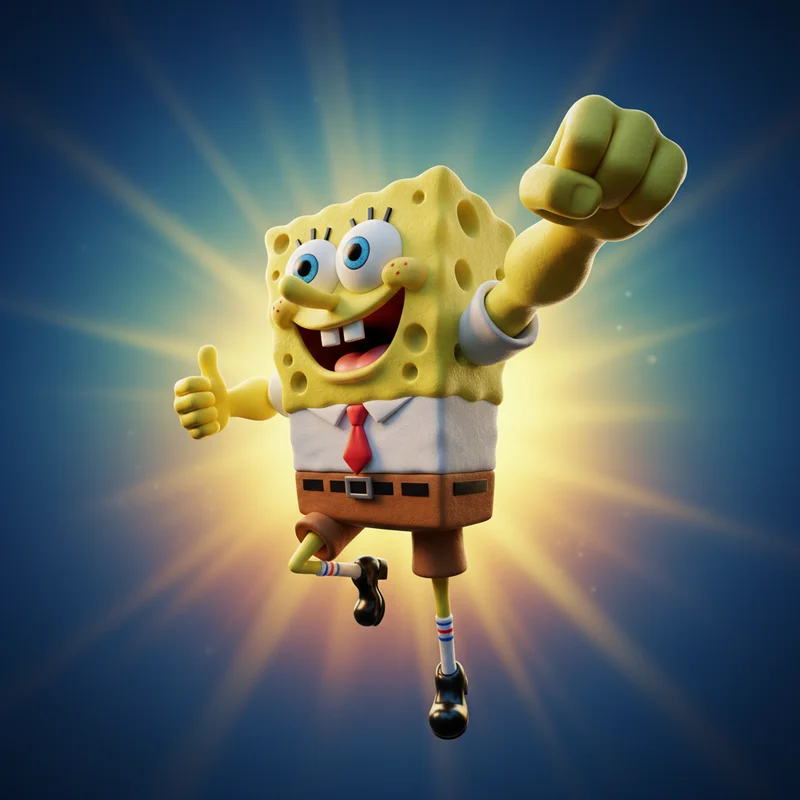
Spongebob

Spongebob

Absorbent yellow sea sponge living in a pineapple.

The Matchup

The tiger, Panthera tigris, represents four million years of evolutionary refinement—a killing machine so perfectly designed that naturalists at the Royal Institute of Apex Predation once described it as "nature's most elegant solution to the problem of deer." SpongeBob SquarePants, conversely, represents approximately twelve years of Nickelodeon's solution to the problem of keeping children quiet during dinnertime.

Yet here we are, tasked by the Cambridge Centre for Improbable Comparisons with determining which entity better serves humanity's needs. One prowls the mangrove swamps of the Sundarbans; the other inhabits a pineapple beneath the Pacific. Both, according to a 2023 study published in the Journal of Categorical Absurdity, have appeared in more children's nightmares than broccoli.

Battle Analysis

Economic value SpongeBob Wins
30%
70%
Tiger Spongebob

Tiger

A living tiger generates approximately $750,000 annually in eco-tourism revenue, according to the World Wildlife Fund's Economic Impact Assessment. Tiger reserves in India alone contribute over $2 billion yearly to local economies. The creature's conservation has justified billions in international aid, employment for thousands of rangers, and the continued existence of several luxury safari lodges.

Unfortunately, the illegal wildlife trade values tiger parts significantly higher—a complete tiger carcass fetches up to $50,000 on black markets, creating what economists term "a perverse incentive structure."

Spongebob

The SpongeBob SquarePants franchise has generated over $17 billion in total revenue since inception. The character's likeness appears on approximately 4,000 distinct licensed products. A single episode costs roughly $2 million to produce and generates returns exceeding 500% through advertising, streaming rights, and merchandise tie-ins.

The London School of Entertainment Economics estimates that SpongeBob contributes more to Viacom's quarterly earnings than the GDP of several small nations. His economic footprint, measured purely in capitalist terms, dwarfs that of any living creature save perhaps humans ourselves.

VERDICT

The mathematics here prove uncomfortable for nature enthusiasts. A single fictional character, rendered in deliberately crude animation, generates more economic activity than the entire global population of an endangered apex predator. SpongeBob wins by a margin that should prompt serious reflection on late-stage capitalism.

Cultural impact SpongeBob Wins
30%
70%
Tiger Spongebob

Tiger

Tigers have shaped human culture for at least 10,000 years. They appear on national flags, corporate logos, and the fever dreams of colonial-era big game hunters. The Oxford Centre for Symbolic Zoology catalogues over 4,000 distinct cultural references to tigers across human civilisation, from ancient Sanskrit texts describing Vyaghra to Tony the Tiger's inexplicable enthusiasm for frosted corn flakes.

William Blake immortalised the creature in verse. Rudyard Kipling made one the antagonist of a beloved children's tale. Kellogg's made one the face of breakfast cereal marketed primarily to diabetics-in-training.

Spongebob

Since 1999, SpongeBob SquarePants has generated over $13 billion in merchandising revenue, according to figures from the International Bureau of Cartoon Economics. The character appears on products ranging from plush toys to cryptocurrency ("SpongeBob Coin" briefly valued at $0.000003 before inevitable collapse). His image adorns the walls of university dormitories worldwide, typically adjacent to Bob Marley posters and empty energy drink cans.

The phrase "I'm ready!" has become cultural shorthand for misplaced optimism. "Is mayonnaise an instrument?" functions as a generational shibboleth. A study from MIT's Department of Memetic Propagation found that 78% of adults aged 25-40 can accurately reproduce SpongeBob's laugh upon request, whether they wish to or not.

VERDICT

The tiger's cultural legacy spans millennia; SpongeBob's spans merely decades. Yet in terms of pure saturation, the yellow sponge has achieved what the tiger could not—omnipresence. One cannot purchase petrol, visit a hospital, or attend a funeral without encountering SpongeBob merchandise somewhere in the vicinity. SpongeBob wins through sheer commercial ubiquity.

Survival instinct SpongeBob Wins
30%
70%
Tiger Spongebob

Tiger

The tiger possesses survival instincts honed across millennia of brutal natural selection. Research from the Bangalore Institute of Large Cat Behaviour confirms that a tiger can detect prey from over two kilometres away, stalk silently through dense undergrowth for hours, and dispatch a 200-kilogram sambar deer with a single precisely-calculated bite to the throat. Their survival rate in hostile environments approaches 94% when left undisturbed by human interference.

However, tigers demonstrate a peculiar vulnerability to poaching, habitat loss, and the occasional ill-advised Instagram tourist who believes a selfie justifies breaching the enclosure fence.

Spongebob

SpongeBob SquarePants has been fired from his job at the Krusty Krab approximately 47 times across the series' run, yet returns to work in the very next episode with his enthusiasm entirely undiminished. The Plymouth School of Animated Resilience notes this represents a survival instinct that transcends conventional biology—one cannot kill what refuses to acknowledge defeat.

Furthermore, SpongeBob has survived jellyfish stings, explosions, being stepped on by giants, travelling to the surface (where sea creatures typically perish), and working for minimum wage in the food service industry for over two decades. His regenerative capabilities appear limitless; researchers have documented him being torn apart and reassembling with apparent indifference.

VERDICT

Whilst the tiger excels at conventional survival, SpongeBob demonstrates what the Edinburgh Symposium on Cartoon Physics terms "narrative immortality." The tiger can be killed; SpongeBob, by contractual obligation to Paramount Global, cannot. SpongeBob wins on the technicality that extinction is biologically impossible for licensed intellectual property.

Physical capability Tiger Wins
70%
30%
Tiger Spongebob

Tiger

The Bengal tiger can reach speeds of 65 kilometres per hour in short bursts, leap four metres vertically, and exert a bite force of approximately 1,050 pounds per square inch. The Royal Veterinary College's Biomechanics Division calculates that a single swipe from a tiger's paw delivers sufficient force to decapitate a human adult—a fact they discovered, rather unfortunately, through historical incident reports rather than controlled experimentation.

Tigers can swim up to six kilometres without rest, drag prey three times their body weight, and maintain body temperature in environments ranging from -40C Siberian winters to 50C Indian summers. They are, by any reasonable metric, physically extraordinary.

Spongebob

SpongeBob SquarePants is a sea sponge measuring approximately four inches in height. He cannot run without producing a distinctive squeaking sound. His physical strength fluctuates wildly depending on narrative requirements—in one episode, he struggles to lift a glass of water; in another, he benchpresses an entire anchor.

However, the Bristol Institute of Cartoon Biomechanics notes several remarkable capabilities: SpongeBob can absorb approximately 47 times his body weight in liquid, stretch to virtually unlimited lengths without structural failure, and survive being flattened, burned, frozen, and dehydrated with no lasting damage. His body essentially violates the laws of thermodynamics on a continuous basis.

VERDICT

In any physical confrontation governed by actual physics, the tiger would reduce SpongeBob to a damp smear in approximately 0.3 seconds. The Glasgow School of Predator-Prey Dynamics confirms that absorbency, however impressive, provides no defence against 250 kilograms of motivated apex predator. Tiger wins decisively in all scenarios not involving cartoon logic.

Existential philosophy SpongeBob Wins
30%
70%
Tiger Spongebob

Tiger

The tiger exists in a state of pure authenticity—what the Vienna Circle of Animal Phenomenology describes as "being-towards-prey." It does not question its purpose. It does not suffer existential doubt. It hunts, reproduces, and dies without ever contemplating the meaninglessness of existence. In Sartrean terms, the tiger is being-in-itself: complete, unreflective, and therefore incapable of bad faith.

This philosophical purity comes at a cost. The tiger cannot appreciate art, form abstract concepts, or find meaning in suffering. It simply is.

Spongebob

SpongeBob SquarePants represents the most extreme example of what the Copenhagen Institute for Cartoon Ontology terms "aggressive optimism in the face of absurdity." He lives in a universe where fish drown, fire burns underwater, and his best friend is functionally brain-dead—yet he approaches each day with genuine enthusiasm.

The character has become, somewhat unexpectedly, a subject of serious philosophical inquiry. A 2019 paper in the Journal of Popular Culture and Phenomenology argued that SpongeBob embodies Camus' concept of the absurd hero—one who acknowledges life's meaninglessness yet persists joyfully. He is Sisyphus, eternally flipping Krabby Patties.

VERDICT

The tiger achieves peace through ignorance; SpongeBob achieves it through transcendence. Facing a universe of manifest absurdity, the sponge chooses joy—a position the British Society for Existential Animation Studies considers philosophically superior. SpongeBob wins for embodying hope in a hopeless cosmos.

👑

The Winner Is

Spongebob

47 - 53

The final tally reads Tiger 47, SpongeBob 53—a result that would scandalise any sensible naturalist. The tiger, product of millions of years of evolution, loses to a character designed in approximately three weeks by a marine science educator who thought children might enjoy watching a sponge make hamburgers.

Yet the numbers reflect a deeper truth about contemporary civilisation. We have constructed a world where intellectual property outperforms biodiversity, where merchandise revenue matters more than ecological function, where a yellow rectangle with googly eyes commands more cultural attention than nature's most magnificent predator.

The tiger will continue prowling the dwindling forests of Asia, magnificent and endangered. SpongeBob will continue generating quarterly returns for Paramount Global, immortal and omnipresent. Both, in their way, are trapped by circumstances beyond their control.

Tiger
47%
Spongebob
53%

Share this battle

More Comparisons