Topic Battle

Where Everything Fights Everything

WiFi

WiFi

The invisible force that holds modern society together. Suddenly unavailable the moment you need it most, yet somehow strong enough in the bathroom three floors down at that coffee shop. The true test of any relationship.

VS
Hulk

Hulk

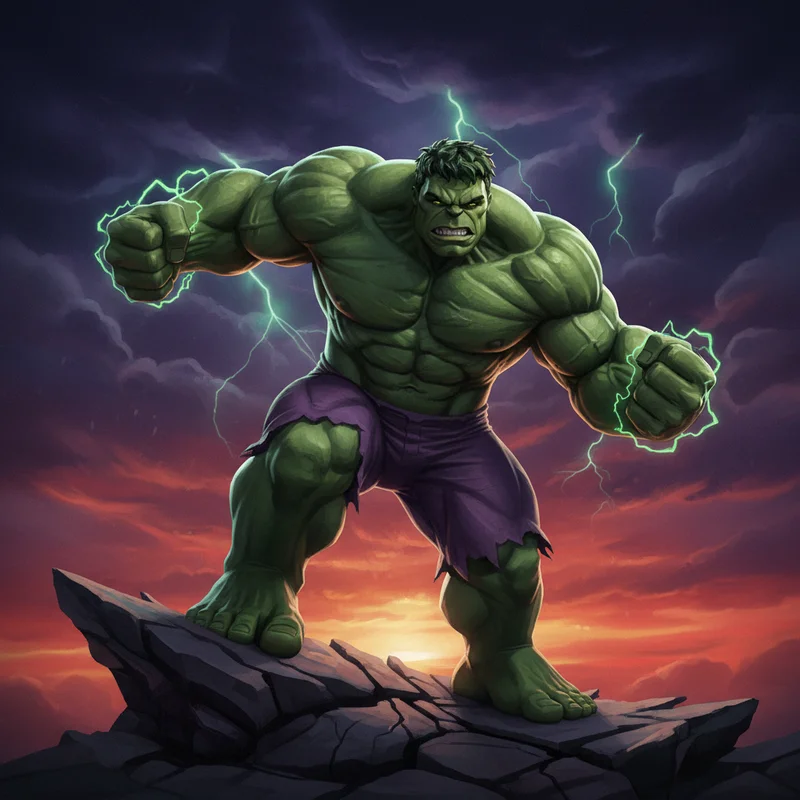
Green rage monster with PhD-level intelligence.

Battle Analysis

Longevity wifi Wins
70%
30%
WiFi Hulk

WiFi

WiFi technology, first commercially released in 1997, has demonstrated remarkable evolutionary persistence. The underlying IEEE 802.11 standard has survived multiple generational upgrades whilst maintaining backward compatibility, a feat of engineering standardisation that borders on miraculous.

The technology shows no signs of obsolescence. If anything, demand for wireless connectivity continues accelerating as Internet of Things devices proliferate and bandwidth requirements expand. Conservative projections suggest WiFi will remain relevant for at least another three decades.

WiFi's longevity stems from its adaptability and the massive infrastructure investment supporting it. Billions of pounds worth of routers, access points, and compatible devices create economic inertia that resists technological displacement.

Hulk

The Hulk's longevity presents fascinating paradoxes. Bruce Banner, the host organism, ages normally in human terms, currently somewhere in his mid-forties by most canonical estimates. Yet the Hulk form appears ageless, its cellular regeneration preventing conventional senescence.

Marvel's multiverse has revealed future timelines where the Hulk exists for centuries, sometimes outliving Earth itself. His theoretical immortality stems from the gamma radiation fundamentally altering his relationship with entropy.

However, the Hulk's longevity depends on Bruce Banner's continued survival in human form between transformations. This creates vulnerability: Banner can be poisoned, infected, or assassinated whilst dormant. The Hulk's immortality is therefore conditional rather than absolute.

VERDICT

WiFi evolves through standardised upgrades with guaranteed compatibility. Hulk's lifespan depends on Banner not being poisoned between rages.
Reliability hulk Wins
30%
70%
WiFi Hulk

WiFi

WiFi's reliability presents what engineers diplomatically term 'opportunities for improvement'. The average domestic router experiences signal degradation when confronted with obstacles such as walls, microwave ovens, fish tanks, and the mere existence of neighbouring networks.

The technology operates on shared frequency bands, meaning your Netflix stream competes with your neighbour's baby monitor for electromagnetic real estate. Connection drops during crucial video conferences have become so common that 'you're on mute' has entered the vernacular as a cultural touchstone.

Enterprise-grade solutions offer considerably better performance, with redundant access points and mesh networks providing 99.9% uptime. Yet even these suffer from the fundamental physics of radio wave propagation: thick concrete, metal structures, and the earth's curvature remain formidable adversaries.

Hulk

The Hulk demonstrates remarkable consistency in one particular metric: when sufficiently angered, he will smash. This cause-and-effect relationship has proven extraordinarily reliable across decades of documented incidents. The trigger mechanism, while requiring specific emotional conditions, functions with near-perfect certainty once activated.

However, the controllability of Hulk's reliability presents significant challenges. Bruce Banner cannot summon the Hulk at will for minor inconveniences, nor can he reliably predict the duration or intensity of each episode. One might say the Hulk operates like a router that occasionally works brilliantly but cannot be rebooted on demand.

The Hulk's physical durability, once transformed, approaches the theoretical maximum. His regenerative capabilities mean he has never experienced a 'connection drop' in combat. He simply continues smashing until the task is complete or something distracts him.

VERDICT

Hulk's transformation, once triggered, is 100% reliable. WiFi drops out when someone microwaves popcorn.
Versatility wifi Wins
70%
30%
WiFi Hulk

WiFi

The applications of WiFi technology span an almost incomprehensible range of human activity. Beyond simple internet connectivity, modern WiFi enables smart home automation, industrial IoT systems, medical device monitoring, precision agriculture, autonomous vehicles, and augmented reality applications.

A single WiFi network can simultaneously support a teenager streaming video games, a parent conducting telehealth consultations, a smart thermostat optimising energy consumption, and a refrigerator ordering milk. This concurrent multi-tasking capability represents WiFi's greatest strength.

The technology continues evolving through standardised iterations: WiFi 6, WiFi 6E, and the emerging WiFi 7 promise progressively higher throughput, lower latency, and improved spectral efficiency. Each generation expands the potential application space without rendering previous implementations obsolete.

Hulk

The Hulk's skill set, whilst undeniably impressive within its domain, demonstrates limited diversification. His primary competency remains smashing, with secondary capabilities including jumping, thunderclapping, and occasionally throwing large objects at other large objects.

Attempts to utilise the Hulk for tasks requiring finesse have historically proven disastrous. He makes an exceptionally poor surgeon, disappointing hairdresser, and catastrophic piano tuner. Even simple tasks like opening doors or preparing sandwiches tend to result in structural damage.

The Hulk does demonstrate situational adaptability, with documented instances of underwater survival, space travel, and resistance to various exotic energies. However, his approach to these challenges invariably involves brute force applications rather than nuanced problem-solving.

VERDICT

WiFi supports billions of diverse applications simultaneously. Hulk's CV essentially reads: 'Smashing (Expert Level)'.
Global reach wifi Wins
70%
30%
WiFi Hulk

WiFi

WiFi networks blanket approximately 60% of the world's inhabited surface, with an estimated 18.6 billion devices currently connected to wireless networks globally. From the coffee shops of Seattle to the yurt encampments of Mongolia, the 2.4GHz and 5GHz frequencies pulse continuously through the ether.

The technology requires no emotional trigger to function, no traumatic catalyst to activate. It simply exists, perpetually broadcasting its presence to any compatible device within range. A single router can service dozens of simultaneous connections, creating a web of invisible infrastructure that makes modern commerce, communication, and entertainment possible.

WiFi's reach extends even to commercial aircraft at 35,000 feet, submarines beneath Arctic ice, and research stations on the Antarctic plateau. It is, quite literally, everywhere humans have chosen to establish themselves.

Hulk

The Hulk's geographical presence is considerably more limited, typically confined to wherever Bruce Banner happens to be when something makes him angry. Statistical analysis of Marvel Comics canon suggests the Hulk has visited approximately 47 countries, though 'visit' often translates to 'partially demolished'.

His reach, while physically impressive during episodes of aggression, requires the cumbersome process of actually travelling to each location. Unlike WiFi, he cannot be in multiple places simultaneously. One cannot simply 'connect' to the Hulk from a distant location; one must be physically present, which most rational beings would prefer to avoid.

The Hulk has, admittedly, demonstrated the ability to leap several miles in a single bound, expanding his immediate operational radius considerably. However, this remains fundamentally inferior to a technology that propagates at the speed of light.

VERDICT

WiFi connects 18.6 billion devices globally and operates simultaneously everywhere, whilst Hulk can only smash one location at a time.
Intimidation factor hulk Wins
30%
70%
WiFi Hulk

WiFi

WiFi presents approximately zero intimidation to the average observer. Its invisible nature renders it incapable of inspiring fear through visual presence. No one has ever fled in terror from a blinking router, nor surrendered unconditionally upon seeing five signal bars.

The technology's threats operate on a more psychological level: the anxiety of poor connectivity, the dread of buffering wheels, the existential horror of 'Network Not Found'. These fears, while genuine, lack the visceral impact of physical threat.

WiFi's potential for harm primarily manifests through data security vulnerabilities. A compromised network can enable identity theft, financial fraud, and privacy violations. Yet these dangers, however serious, fail to trigger the amygdala's fight-or-flight response in the way that a two-metre green monster would.

Hulk

The Hulk registers on intimidation scales with readings that have broken multiple measurement devices. His appearance alone, featuring approximately 450 kilograms of gamma-irradiated muscle tissue wrapped in purple trousers, triggers immediate fear responses in most vertebrate species.

The psychological impact compounds through reputation: the Hulk has defeated gods, demolished military installations, and once punched a giant serpent so hard it uncoiled. This track record of destruction creates anticipatory terror even before visual confirmation.

His rage-amplification mechanism ensures that intimidation attempts against him prove counterproductive. Making the Hulk angrier increases his power output, creating a feedback loop that has humbled some of the universe's most formidable entities. The phrase 'You wouldn't like me when I'm angry' represents one of fiction's most effective threat communications.

VERDICT

Hulk's mere appearance causes mass evacuation. WiFi's worst offence is briefly showing a loading spinner.
👑

The Winner Is

WiFi

54 - 46

This analysis reveals WiFi as the superior entity by a margin of 54% to 46%, a result that may surprise those who instinctively favour physical might over invisible infrastructure.

The Hulk dominates in categories where raw power and intimidation matter: no WiFi signal has ever terrified an alien invasion fleet into retreat, and no router has demonstrated the reliability of gamma-fuelled rage. Yet these advantages prove narrowly applicable in a world increasingly dependent on digital connectivity.

WiFi's victory stems from its ubiquity and versatility. The technology touches billions of lives daily, enabling commerce, communication, and entertainment on a scale that dwarfs even the Hulk's most spectacular tantrums. One cannot stream the Hulk's exploits without WiFi; the irony is unavoidable.

The Hulk represents humanity's fantasy of unlimited personal power, the ability to solve problems through sheer force of will made flesh. WiFi represents the reality of how modern civilisation actually functions: through invisible networks of cooperation and shared infrastructure. Both have their place, but one is considerably more useful for ordering groceries.

WiFi
54%
Hulk
46%

Share this battle

More Comparisons