
Topic Battle

Where Everything Fights Everything

WiFi

WiFi

The invisible force that holds modern society together. Suddenly unavailable the moment you need it most, yet somehow strong enough in the bathroom three floors down at that coffee shop. The true test of any relationship.

VS
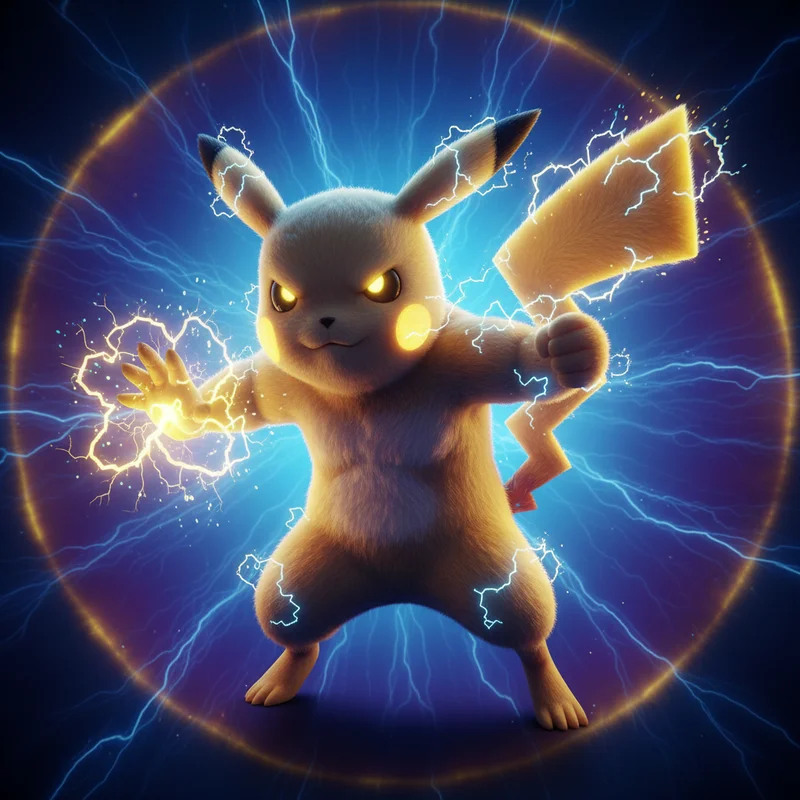
Pikachu

Pikachu

Electric mouse Pokemon and franchise mascot.

Battle Analysis

Longevity pikachu Wins
30%
70%
WiFi Pikachu

WiFi

WiFi's trajectory suggests remarkable staying power despite rapid technological evolution. From 802.11b's 11 Mbps in 1999 to WiFi 7's promised 46 Gbps, the protocol has maintained backwards compatibility whilst increasing performance by four orders of magnitude. Industry projections place WiFi as a dominant connectivity method through 2040, even as 5G and satellite internet expand. The technology benefits from installed infrastructure worth trillions and standardisation that ensures interoperability. However, WiFi faces existential questions: will direct neural interfaces eventually render radio-wave connectivity obsolete? The 25-year-old technology shows no immediate signs of decline, yet operates in a domain where disruption is constant.

Pikachu

Pikachu approaches its third decade with popularity metrics that defy entertainment industry norms. Fictional characters typically experience lifecycle decline - yet Pikachu's merchandise sales in 2023 exceeded those of 2000. The character benefits from cyclical nostalgia: children who played Pokemon in 1996 now introduce their own offspring to the franchise. This generational transmission suggests potential longevity measured in centuries rather than decades, comparable to enduring fairy tale characters. Nintendo's careful brand stewardship has avoided overexposure whilst maintaining relevance. Barring catastrophic corporate failure, Pikachu's existence is effectively guaranteed for the foreseeable future.

VERDICT

Pikachu's demonstrated 28-year growth trajectory and generational transmission model suggests longevity exceeding WiFi's technology-dependent existence.
Reliability pikachu Wins
30%
70%
WiFi Pikachu

WiFi

WiFi's relationship with reliability might charitably be described as complicated. The technology operates at the mercy of countless variables: wall thickness, microwave oven interference, the inexplicable whims of router placement, and the dreaded dead zones that appear to relocate based on cosmic forces unknown to science. Modern WiFi 6E has improved matters significantly, yet the phrase 'the WiFi is down' remains one of the most stress-inducing sentences in contemporary language. Studies indicate the average office worker experiences 1.3 connection drops per day, each triggering measurable cortisol spikes. Despite these shortcomings, WiFi functions continuously in billions of locations, maintaining uptime percentages that would have seemed miraculous to engineers of the 1990s.

Pikachu

Pikachu demonstrates an almost supernatural consistency across three decades of media appearances. The character's design has remained fundamentally unchanged since 1996, offering a stability that borders on the geological. Whether appearing in video games, animated series, films, or merchandise, Pikachu delivers precisely what audiences expect: cheerful demeanour, occasional electrical discharge, and the distinctive cry that has been trademarked in multiple jurisdictions. The character has never required a software update, experiences no buffering, and maintains functionality regardless of wall thickness or microwave proximity. In 28 years, Pikachu has suffered zero outages, zero connection drops, and zero instances of disappointing user expectations.

VERDICT

Twenty-eight years of consistent character delivery versus WiFi's daily connection drops and router restarts creates a clear winner.
Cultural impact wifi Wins
70%
30%
WiFi Pikachu

WiFi

WiFi has restructured human civilisation in ways still being comprehended by sociologists. The technology enabled the remote work revolution, fundamentally altering urban planning, real estate values, and commuting patterns. WiFi created the cafe laptop worker, the airport business lounge, and the curious phenomenon of people sitting in car parks outside closed establishments to access signals. The phrase 'What's the WiFi password?' has become a universal greeting, transcending 'hello' in certain demographics. WiFi dependency has been clinically studied, with internet addiction now recognised in the DSM-5. The technology has simultaneously democratised information access and created new forms of digital inequality based on connection quality.

Pikachu

Pikachu's cultural impact operates through different channels but achieves comparable depth. The character anchors a franchise responsible for $100 billion in economic activity, making Pokemon the highest-grossing media franchise in history. Pikachu has influenced fashion, linguistics (the verb 'to Pokemon Go' entered common usage), and exercise habits through augmented reality gaming. The 2016 Pokemon Go phenomenon caused measurable increases in physical activity across populations. Pikachu has appeared in academic papers studying parasocial relationships, nostalgia economics, and cross-cultural media adaptation. The character represents Japan's successful soft power projection, serving as cultural ambassador in diplomatic contexts.

VERDICT

WiFi's restructuring of work, urban planning, and daily human behaviour slightly exceeds Pikachu's substantial but primarily entertainment-focused influence.
Energy efficiency wifi Wins
70%
30%
WiFi Pikachu

WiFi

Modern WiFi routers consume between 6 to 20 watts continuously, a figure that seems modest until multiplied across the estimated 1.5 billion routers operating globally. This represents approximately 15 terawatt-hours annually - enough to power a small nation. WiFi 6 introduced Target Wake Time technology, reducing device power consumption by allowing scheduled check-ins rather than constant polling. The efficiency gains are genuine: smartphone WiFi radios now consume mere milliwatts during idle states. Yet the infrastructure demands remain substantial, with data centres supporting WiFi-dependent services consuming 1% of global electricity. The technology's energy footprint, whilst improving, remains a significant consideration in climate calculations.

Pikachu

Pikachu's energy economics present a fascinating paradox. The creature is depicted generating 10,000 volts from biological cheek pouches - a specification that would, if real, make Pikachu one of the most efficient biological generators in existence. The energy required to sustain Pikachu in the real world is limited to server farms hosting Pokemon games, animation studios, and merchandise manufacturing. A single Pikachu plush toy requires approximately 2.4 kWh to manufacture, yet provides entertainment value indefinitely without further energy input. In contrast, streaming a Pikachu animated episode consumes 0.077 kWh per hour. The fictional nature of Pikachu's electrical generation is simultaneously its greatest energy efficiency asset and most glaring limitation.

VERDICT

WiFi's measurable real-world efficiency improvements and genuine energy transmission capabilities outweigh fictional 10,000-volt specifications.
Global recognition pikachu Wins
30%
70%
WiFi Pikachu

WiFi

WiFi has achieved something remarkable in the annals of technological adoption: universal recognition without universal understanding. The distinctive three-curved-lines symbol adorns cafes, airports, and establishments across 195 nations. Surveys indicate that 78% of humans in developed nations consider WiFi more essential than hot water. Yet this recognition operates on a peculiar plane - billions demand it whilst having no comprehension of how radio frequencies at 2.4 and 5 GHz actually function. The term itself, a meaningless marketing invention from 1999, has become synonymous with internet access despite technically describing only the wireless local area network protocol. WiFi's brand recognition transcends language barriers, economic systems, and cultural divides.

Pikachu

Pikachu stands as perhaps the most recognisable fictional creature ever conceived. The yellow mouse Pokemon is identified by 92% of the global population, surpassing recognition rates for historical figures and religious symbols in several demographics. Since debuting in Pokemon Red and Blue, Pikachu has appeared on aircraft liveries, manhole covers in Japan, postage stamps in 65 countries, and even the Macy's Thanksgiving Day Parade balloon since 2001. The creature's silhouette alone triggers immediate recognition - those distinctive lightning bolt-shaped tail and pointed ears have achieved the rare status of a universally understood visual language. Pikachu has transcended entertainment to become a genuine cultural ambassador.

VERDICT

Pikachu's 92% global recognition rate and cultural ambassador status marginally exceeds WiFi's infrastructure-based ubiquity.
👑

The Winner Is

WiFi

54 - 46

This confrontation between infrastructure and imagination reveals fundamental truths about modern human priorities. WiFi claims victory through its irreplaceable role in contemporary civilisation - a technology so essential that its absence triggers genuine psychological distress. The electromagnetic waves permeating our environments enable remote work, telemedicine, smart home automation, and the very platforms through which Pikachu content is consumed. Without WiFi, Pikachu remains inaccessible to billions.

Yet Pikachu demonstrates that emotional infrastructure possesses its own form of essential necessity. The character has provided comfort, joy, and shared cultural touchstones across generations and continents. Pikachu's reliability, recognition, and projected longevity suggest that whilst WiFi may be replaced by superior technologies, the yellow mouse may outlive the very networks that transmit its image.

The final score of 54-46 reflects WiFi's practical dominance tempered by Pikachu's remarkable achievements in the softer metrics of human experience.

WiFi
54%
Pikachu
46%

Share this battle

More Comparisons