Topic Battle

Where Everything Fights Everything

Wolf

Wolf

Pack-hunting canid ancestor of domestic dogs, famous for howling and complex social hierarchies.

VS
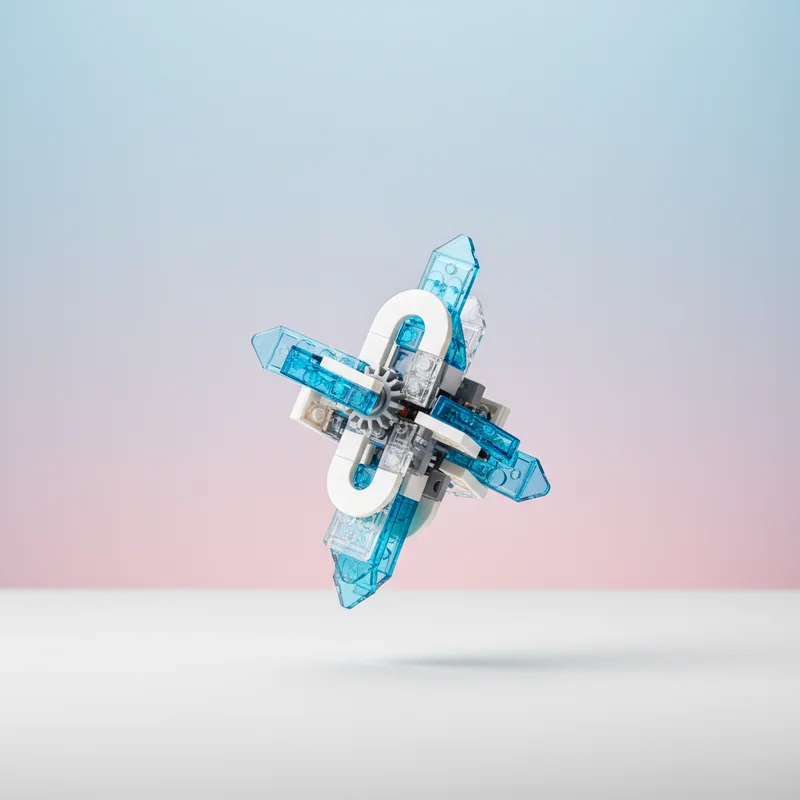
Lego

Lego

Interlocking plastic bricks and barefoot landmines.

Battle Analysis

Pedagogical value lego Wins
30%
70%
Wolf Lego

Wolf

Wolf study offers substantial educational content across multiple disciplines. Ecology courses examine wolf reintroduction programmes, particularly the celebrated Yellowstone restoration that demonstrated trophic cascade effects on entire ecosystems. Behavioural science utilises wolf pack dynamics to explore social hierarchy, communication, and cooperative hunting. Conservation biology treats wolf recovery as a case study in species management. However, direct wolf interaction remains impossible for most students, limiting pedagogical application to observational and theoretical frameworks.

Lego

The Lego brick serves as humanity's most accessible introduction to spatial reasoning, engineering principles, and systematic construction. Educational research demonstrates measurable improvements in fine motor skills, mathematical reasoning, and creative problem-solving among children engaged with construction toys. Lego Education, the company's dedicated learning division, operates programmes in 85 countries, reaching approximately 30 million students annually. The Lego brick teaches through direct manipulation, enabling hands-on understanding of structural principles inaccessible through observation alone.

VERDICT

Lego reaches 30 million students annually through direct hands-on engagement, whilst wolf education remains predominantly theoretical.
Cultural influence wolf Wins
70%
30%
Wolf Lego

Wolf

The wolf's cultural footprint spans virtually all human civilisation. From the she-wolf of Rome nursing Romulus and Remus to the Norse wolf Fenrir destined to devour Odin, lupine mythology permeates foundational narratives across continents. The wolf serves simultaneously as symbol of danger, loyalty, wilderness, and social cohesion. Modern culture maintains this fascination through werewolf mythology, nature documentaries, and the enduring appeal of wolf imagery in fashion, sports mascots, and corporate branding. The wolf speaks to something primal in human psychology.

Lego

Since 1949, Lego has constructed an equally formidable cultural edifice. The brand has infiltrated cinema through The Lego Movie franchise (grossing over £800 million globally), established theme parks across four continents, and partnered with virtually every major intellectual property from Star Wars to Harry Potter. Adult Fan of Lego communities generate millions of online content pieces annually. The verb 'to Lego' has entered colloquial usage meaning to construct systematically. Lego represents creativity, patience, and the democratisation of engineering.

VERDICT

The wolf's cultural influence spans 300,000 years of human storytelling versus Lego's 75-year commercial presence.
Global distribution lego Wins
30%
70%
Wolf Lego

Wolf

Historical wolf range once encompassed the entire Northern Hemisphere, from Arctic tundra to Mexican deserts, across Europe, Asia, and North America. Human persecution reduced this territory by approximately 68% over the past three centuries. Current populations, whilst recovering in certain regions, remain confined to wilderness areas distant from human settlement. Approximately 200,000 to 250,000 wolves survive globally, concentrated in Russia, Canada, and the northern United States. The wolf cannot exist wherever humans predominate; territorial conflict remains fundamentally unresolvable.

Lego

Lego bricks have achieved distribution metrics that would humble any biological organism. Annual production exceeds 36 billion elements, sufficient to circle the Earth five times if laid end to end. Lego operates in 140 countries, with official stores spanning six continents. Researchers estimate approximately 400 billion Lego bricks currently exist on Earth—roughly 62 for every human being. Unlike wolves, Lego thrives in human environments, establishing permanent colonies in children's bedrooms, adult display cases, and the underside of furniture across the developed world.

VERDICT

Lego achieves global distribution exceeding 400 billion units, whilst wolf populations struggle to maintain 250,000 individuals.
Defensive capability lego Wins
30%
70%
Wolf Lego

Wolf

As an apex predator, the wolf possesses formidable offensive and defensive capabilities. The aforementioned 400 PSI bite force can crush bones effortlessly. Pack coordination enables wolves to defend territory against threats including bears, mountain lions, and rival wolf packs. Adult wolves have few natural predators beyond humans. However, wolf defence operates only whilst the animal remains animate; a wolf provides no protection when absent, asleep, or deceased. Defence requires constant energy expenditure and expires with the organism.

Lego

The Lego brick's defensive capabilities, whilst unconventional, achieve remarkable efficacy through passive deterrence. A single brick positioned upon carpeted flooring inflicts pain disproportionate to its 2.3-gram mass, generating pressure concentrations that activate nociceptors with startling efficiency. Unlike wolf defence, Lego protection operates continuously without energy expenditure, consciousness, or presence. The scattered Lego field creates a defensive perimeter that functions identically whether the owner is present, absent, or deceased. Several academic papers have documented Lego-induced foot injuries requiring medical intervention.

VERDICT

Lego provides continuous passive defence requiring no energy, whilst wolf protection expires with the organism's attention span.
Structural integrity lego Wins
30%
70%
Wolf Lego

Wolf

The wolf's skeletal architecture represents 40 million years of evolutionary refinement. A mature specimen possesses 319 bones articulated to deliver explosive acceleration, sustained pursuit over distances exceeding 30 kilometres, and bite force measuring approximately 400 pounds per square inch. The wolf's structure self-repairs minor damage through biological processes, regenerating tissue without external intervention. However, catastrophic structural failure proves irreversible, and the entire system degrades predictably over a 6-8 year lifespan in wild conditions.

Lego

The Lego brick achieves structural integrity through precision injection moulding at tolerances of 2 micrometres—approximately one-fiftieth the width of a human hair. This precision enables the legendary clutch power that holds constructions together through friction alone. A standard 2x4 brick can support a vertical column of 375,000 additional bricks before structural failure occurs. Individual bricks remain functional indefinitely when stored properly, with specimens from the 1960s maintaining full compatibility with modern production. The Lego system, unlike biological structures, does not age.

VERDICT

Lego achieves permanent structural integrity through engineering precision, whilst wolf architecture degrades irreversibly over time.
👑

The Winner Is

Lego

45 - 55

The investigation reveals an unexpected victor in what initially appeared a contest between incomparable categories. The wolf, despite millennia of evolutionary refinement and cultural significance bordering on the mythological, encounters fundamental limitations in scalability, distribution, and practical application to modern human existence. Its excellence remains confined to wilderness contexts increasingly distant from daily life.

The Lego brick, conversely, has achieved something the wolf cannot: universal integration into human civilisation without territorial conflict. It provides structural permanence where biology offers only temporary configuration. It distributes globally whilst wolves retreat. It educates through direct engagement whilst wolves remain observable only at distance. The wolf inspires; the Lego brick enables.

Wolf
45%
Lego
55%

Share this battle

More Comparisons